traumahealing
7 episodes tagged "traumahealing".

Are You Addicted to Chaos?
You say you want peace. You say you want sobriety. You say you want a happy marriage. But every time things get too quiet, you set your own house on fire just to remember what the smoke smells like. I’m Michael. I’m a psychologist in training, a sober dad, and today I am probably going to hurt your feelings. But if I don't, I'm not doing my job. If you've been following the channel, you know I am a recovered alcoholic. But the insidious thing about recovery is this: Sobriety isn't just putting down the bottle. It is staying away from the vibe of the bottle. And for a lot of us, the vibe of the bottle is absolute, unadulterated chaos. A few weeks ago, I was making espresso on a Saturday morning. The West Texas sun was shining, Skylar was in the other room, and my son was playing quietly. Bills were paid. Nobody was sick. It was a perfectly beautiful morning. Suddenly, my chest tightened up. I felt this venomous itch to find a problem. To check my bank account for a charge that didn't belong. To pick a fight over how the dishwasher was loaded. Why? Because when you have spent over a decade wiring your brain for disaster, peace feels like a threat. It's time to stop the self-sabotage.

Repressed Anger = Migraines & Jaw Pain
"Your body is keeping the receipt for the emotions that you refuse to pay for." Dr. Bessel van der Kolk wrote the Bible on trauma: The Body Keeps the Score. He found that when we repress our emotions, they don't just disappear. They settle directly into our tissue. Repressed anger turns into jaw pain and migraines. Repressed grief turns into autoimmune flare-ups and respiratory issues. Dr. Gabor Maté has written extensively on how the "nice" personality—the people who never get angry, who avoid conflict, and who constantly please others—are statistically more likely to develop chronic illness. As I dive deeper into my psychology training, this mind-body connection is one of the most profound truths I've encountered. You cannot outsmart your nervous system. It's time to stop paying for your repressed emotions with your physical health.

Drowning in Your Own Defense Mechanism
"You're exhausted—not because your life is hard, but because you're running a 24/7 PR campaign to convince yourself that you're happy." Let's look at the mechanics of the mind. Freud called it repression. When you shove a painful thought, trauma, or grief into your unconscious, you are essentially trying to hold a giant, inflatable beach ball underwater. Does the ball go away? No. It stays right there. But now you have to use constant, draining energy to keep it submerged while standing there shaking, smiling, and telling everyone, "I'm fine." As a psychologist in training, I have to tell you the hard truth: You can't swim, you can't play, and you can't connect with anyone while you're holding that ball down. The exact energy it takes to pretend you aren't sad is the energy you need in order to heal. It is time to let the beach ball surface.

Stop Running a PR Campaign for Your Life
You aren't exhausted because your life is hard. You are exhausted because you are running a 24/7 PR campaign to convince yourself that you are happy. 📉 In this video, I break down Sigmund Freud’s concept of Repression using the "Beach Ball Metaphor." Imagine your trauma or anger is a giant inflatable beach ball. You don't want anyone to see it, so you shove it underwater. Does the ball go away? No. It takes constant, shaking energy to keep it submerged. You can't swim, you can't play, and you can't hug anyone because your hands are busy holding down the truth. The energy you use to pretend you're "fine" is the exact same energy you need to heal. 👇 Discussion: What "beach ball" are you tired of holding down today? Let's talk about it in the comments.

Trauma is the Wound, Resentment is the Scab
Trauma is what happens to you. Resentment is what you keep. 🛑 Trauma is a wound, but resentment is picking the scab every morning so it never heals. In this video, I break down the actual definition of Resentment. It comes from the Latin re-sentire, which means "to feel again" or "re-feel". When you ruminate on the past, your brain doesn't know the difference between the memory and the event. Your amygdala fires and your body prepares for a fight that happened 10 years ago. You are trapping yourself in a time loop. You’re living in a haunted house, but you are the ghost. 👇 Discussion: Are you "picking the scab" of a past hurt? What would happen if you finally let it heal? Tell me below.
Choosing Responsibility Over Ease
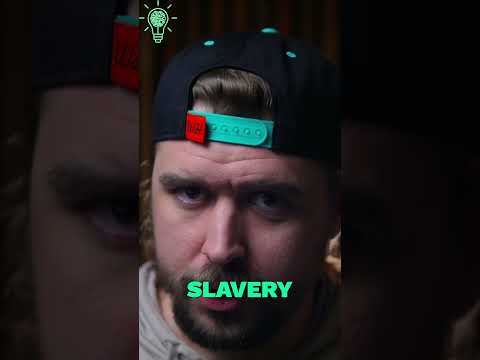
⏳ Freedom is harder than slavery—and that’s why we keep going back. This Short breaks down chaos addiction through Scripture, using Exodus to show how the Israelites romanticized slavery because freedom required responsibility. Psychology gave this a name later, but the Bible diagnosed it first. Sobriety is freedom. Health is freedom. Growth is freedom. And freedom is terrifying when you’re used to chains. Most of the chaos in your life isn’t bad luck—it’s impatience. It’s forcing doors God hasn’t opened yet because you don’t trust His timing. Faith isn’t frantic action. Faith is letting the plates sit still. If this hit home, like, comment, and subscribe for more faith-rooted psychology, recovery, and straight talk without the fluff.

Your Impatience is a Problem
⏳ Most chaos isn’t God’s plan — it’s your panic. This Short breaks down chaos addiction through a Biblical lens, using the story of Abraham, Sarah, and Hagar to show what happens when we try to manufacture miracles instead of trusting God’s timing. Waiting feels boring. Silence feels threatening. So we force doors that aren’t open yet — and live with the consequences for years. Here’s the hard truth: faith isn’t frantic action. Faith is the discipline of stillness. If you can’t tolerate boredom, you’ll keep injecting chaos into your life. Learn why exposure therapy for boredom retrains your brain, calms your amygdala, and breaks the addiction to stress. 👉 Like, comment, and subscribe for more faith-rooted psychology, recovery, and straight talk.