Relationship Advice
16 episodes tagged "Relationship Advice".

How Manipulators Flip The Argument
Recognize the DARVO tactic used to manipulate conversations and shift blame. Learn how abusers use Deny, Attack, and Reverse Victim and Offender to keep you off balance. This breakdown clarifies why you end up apologizing during arguments with toxic individuals and how to spot these patterns early. Ever find yourself confronting a partner with a clear lie, only to end up being the one crying and begging for forgiveness? You aren’t losing your mind—you're being targeted by an intense psychological maneuver. In this clip from our channel, we're exposing a toxic, highly calculated relationship tactic called DARVO: Deny, Attack, and Reverse Victim & Offender. When you bring up a hard truth, a master manipulator will instantly flip the script. They deny the reality, gaslight you into questioning your own sanity, attack your insecurities, and somehow finish the argument by claiming they feel unsafe around you. Suddenly, the offender becomes the victim, and you're left apologizing for reality. Stop letting them drag you into an emotional trap. Call out the DARVO play in your head the second it starts. When they tell you you're crazy, look them dead in the eye and stay on the facts. Because at the end of the day, facts do not care about their (or your) feelings. If you're ready to arm yourself with brutal honesty and reclaim your psychological boundaries, smash that Subscribe button, drop a comment with your thoughts below, and let's keep breaking down the hard truths of modern relationships. 🔗 Break the cycle and join our community here: [Link to Discord Server/Full Video]

The Victim Mentality Trap
When trust is broken, it's crucial to acknowledge your responsibility and abandon the victim mindset. You pulled the pin on the grenade, and you can't complain about the noise of the explosion. This psychological shift is essential for moving past emotional abuse in relationships. 💔🧠 💬 Let me know in the comments: Have you ever struggled with playing the victim after making a difficult choice? 👇 If this gave you the permission you needed to set a hard boundary today, hit that LIKE button and SUBSCRIBE to Sober Psychology for more uncompromising truth on faith, mental health, and trauma recovery.

The Cost of Trusting Too Soon
While God commands forgiveness, it does not mean granting unearned access. True trust is incredibly expensive, requiring sustained behavioral proof that an individual is no longer dangerous. This nuanced understanding is crucial for navigating trust issues in relationships and for your overall mental health. 💔🧠 💬 Let me know in the comments: Have you ever felt pressured by others to give trust back before it was actually earned? 👇 If this gave you the permission you needed to set a hard boundary today, hit that LIKE button and SUBSCRIBE to Sober Psychology for more uncompromising truth on faith, mental health, and trauma recovery.
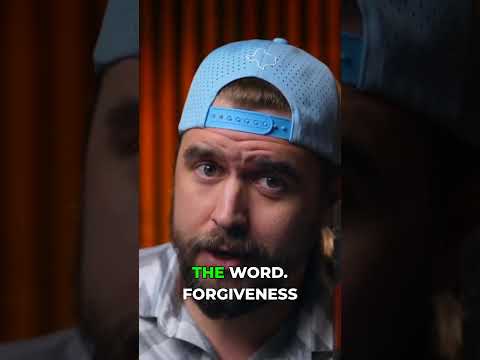
Stop Confusing These Two Things About Forgiveness
This video explores the concept of forgiveness, arguing that some interpretations have "butchered" its true meaning. True forgiveness is about pardoning a debt and releasing resentment, which is a key step towards mental health and healing. By understanding the psychology behind letting go of anger, you can achieve genuine personal freedom. 💔🧠 💬 Let me know in the comments: How do you define forgiveness in your own life? 👇 If you're ready to do the hard work and face the brutal truth, hit that LIKE button and SUBSCRIBE to Sober Psychology for more raw psychology, relationship repair, and breaking toxic cycles.

Were they lying to you then, too? (Betrayal Trauma) |
When trust is shattered, it doesn't just impact your future; it retroactively affects your past, leading to questions like, "Were they lying to me then too?" This kind of betrayal can be a profound source of emotional abuse and trauma. It's crucial to understand that snooping in such situations isn't a sign of craziness, but often a traumatized individual's attempt to establish a baseline of reality and protect their mental health. Understanding the psychology behind these reactions is a vital step toward healing. 💔🧠 💬 Let me know in the comments: Have you ever experienced the "Rearview Mirror" effect where a betrayal ruined your past memories? 👇 If this helped validate what you're going through, hit that LIKE button and SUBSCRIBE to Sober Psychology for more raw truth on mental health, trauma recovery, and healing broken relationships. 🔗 Watch next: [Insert Link to related video, e.g., "The Glass House Phase: Rebuilding Broken Trust"]

Can love survive an affair? (The brutal truth) |
Can love survive after the trust is completely broken? The short answer is yes. The long answer is much harder. 🛑💔 Whether it's an affair, a hidden bank account, or a relapse, the moment ultimate trust is broken, the relationship you had is dead. You're attending its funeral right now. The only question left on the table is this: are you willing to do the excruciating work of building a brand-new relationship with the person who destroyed the last one? You can't go back to how things were. You have to start over. It takes brutal honesty, radical accountability, and a willingness to mourn what you lost so you can build what comes next. 💬 Let me know in the comments: Have you ever had to build a "brand new" relationship with the same person? 👇 If you need help navigating the wreckage, hit that LIKE button and SUBSCRIBE to Sober Psychology for more uncompromising truths on mental health, relationships, and breaking toxic cycles.

Stop running from the pain you caused |
Are you running from the pain you caused? It's time to stop deflecting and stand in the fire. 🛑🔥 The natural human reflex when we hurt someone we love is to run, deflect, or get defensive. We want to avoid the uncomfortable consequences of our own actions. But if you actually want to heal your relationship, you have to do the exact opposite. The greatest act of manhood or womanhood you will ever perform is to stand in the fire of the pain you caused. You have to look directly at the wreckage, take absolute accountability, and refuse to flinch until that person feels safe again. It’s brutal, and it’s uncomfortable, but it is the only way to rebuild broken trust. Stop running. 💬 Let me know in the comments: What is the hardest part about facing the pain you've caused someone else? 👇 If you're ready to stop running and do the hard work of healing, hit that LIKE button and SUBSCRIBE to Sober Psychology for more raw truth on mental health, relationships, and breaking toxic cycles.

You broke the trust. Now you have to build the ramp. |
If you broke the trust, you no longer have the right to privacy. Welcome to the Glass House phase. 🛑📱 Rebuilding trust after a massive betrayal—whether it's addiction, infidelity, or chronic lying—requires Step One: Radical Transparency. If you're the one who broke the trust, you don't get to demand privacy anymore. Privacy is a privilege of the trustworthy. For the foreseeable future, your phone, your location, and your schedule are open books. You don't get to be offended by this. You're building a wheelchair ramp for the person whose legs you broke. Stop complaining about the construction work and start rebuilding. 💬 Let me know in the comments: Have you ever had to walk through the "Glass House" phase to save a relationship? 👇 If this hit home today, hit that LIKE button and SUBSCRIBE to Sober Psychology for more raw truth on mental health, relationships, and doing the hard work to heal.

Your Marriage is Over (Now What?)
Can love truly survive after trust is broken, after infidelity or a hidden bank account? Yes, but the relationship you had is gone. This video offers a blueprint for rebuilding, emphasizing radical transparency and the betrayer becoming a healer, to foster relationship healing. We explore attachment trauma and how to rebuild trust to forge a stronger future, making this essential relationship advice for anyone navigating marriage challenges. We cover: • The Psychology of the Shatter: Why betrayal is a form of PTSD and how it affects your amygdala. • The Theology of Forgiveness: Why "pardon of debt" is different from reconciliation. • The Glass House Phase: Why the betrayer must forfeit privacy to build a "wheelchair ramp" for the person they hurt. • The Healer Shift: How the source of the pain must become the source of the comfort to break trauma bonds. The Challenge: If you’re ready to stop looking at the wreckage and start building, drop a comment below with "Building 2.0".

The Hard Truth About Making a Marriage Work |
Is love just an emotion, or is it a daily choice? In this clip, we break down why love is an action word and how different personality types handle conflict and growth in a relationship. It's easy to love someone when you wake up feeling great, but what happens when the "unicorn farts and rainbows" fade? We discuss the real, actionable side of love and dive into a classic Enneagram relationship dynamic. Watch as we explore what happens when an Enneagram 8 (the Challenger who wants to push and get things done) navigates life with an Enneagram 9 (the Peacemaker who tends to withdraw). Michael and his wife's dynamic perfectly illustrates how two entirely different approaches to conflict can actually help balance a relationship—teaching the 8 to find their softer side, and empowering the 9 to embrace action and boundaries. If this dynamic resonated with you, hit subscribe for more relationship insights and psychological breakdowns!

Why you aggressively clean the kitchen at 10 PM |
Are you starting fights just to get their attention? Let's talk about the Ego's Hitman and the "counterfeit intimacy" of conflict. 🛑🧠 Why do we sabotage a perfectly peaceful evening? Because conflict is loud, passionate, and requires eye contact. It mimics the intensity of intimacy, but without the terrifying risk of actual vulnerability. Your ego is basically a hitman hired to kill your peace, and it uses your specific personality structure to pull the trigger. If you're the Challenger type, you pick a fight to test their loyalty (I am very guilty of doing this with Skylar). If you're the Helper type, you become a martyr, aggressively cleaning the kitchen at 10 PM and sighing loudly so they ask what's wrong. And if you're the Peacemaker, you shut down, withhold affection, and make them guess why you're mad. It's time to stop the sabotage and learn how to be genuinely vulnerable. 💬 Let me know in the comments: Which sabotage style are you most guilty of: the Challenger, the Helper, or the Peacemaker? Be honest. 👇 If this hit a little too close to home, hit that LIKE button and SUBSCRIBE to Sober Psychology for more raw truth on mental health, relationships, and breaking toxic cycles.

You Should NOT Be Arguing Like This in Your Relationship |
Are you manufacturing a crisis just to feel the adrenaline of surviving it together? Let's talk about trauma bonds, James 4:1, and the addiction to misery. 🛑📖 Did you know that every personality type has a built-in mechanism for destroying a quiet room? The Apostle James diagnosed this over 2,000 years ago: the fight you're having about the electric bill isn't actually about the bill. It's the overflow of the war happening within your own soul. When looking in the mirror is too painful, we project our inadequacy onto our spouse. Conflict becomes the ultimate distraction from self-reflection. But let's be brutally honest: the makeup sex after a massive, toxic fight isn't love. It's a trauma bond flooded with dopamine. If you want to grow up, you have to learn how to connect when nobody is bleeding. For me, that means learning how to sit on the couch with Skylar, look her in the eye, and just say, "I'm having a really hard time today and I don't know why." No yelling. No blaming. Just raw, terrifying, boring honesty. That is real intimacy, and it's the only cure for the addiction to misery. 💬 Let me know in the comments: Have you ever caught yourself starting a fight just to avoid looking at your own internal struggles? 👇 If you needed this reality check today, hit that LIKE button and SUBSCRIBE to Sober Psychology for more raw truth on faith, mental health, and breaking generational cycles.

You Aren’t In Love, You’re Obsessed (The Limerence Trap)
Let’s be honest: Are you actually in love with them? Or are you just addicted to the pain of chasing them? In this episode of Sober Psychology, we are breaking down Limerence—the psychological term for when "having a crush" turns into a full-blown obsession. I see this constantly in recovery. We stop drinking, but then we start using people as our drug. We confuse anxiety for passion and toxicity for "soul ties." But science tells us that Limerence is closer to OCD and Addiction than it is to true love. Today, we are stripping away the fantasy. We are talking about the "Frustration Attraction" (why rejection makes you want them more), the danger of falling in love with a "Fantasy Bond," and the hard Biblical truth that turning a human into your source of happiness isn't romance—it’s Idolatry. If you are stuck in a loop of checking their location, analyzing their texts, and begging for crumbs of affection... you need a detox. 👓 IN THIS EPISODE WE COVER: • The Diagnosis: The difference between Healthy Love and Limerence (Obsession). • The Neuroscience: How "Frustration Attraction" hijacks your dopamine system. • The Fantasy Bond: Why you fall in love with "Potential" instead of Reality. • Biblical Truth: The story of Leah and Jacob, and the danger of making a human your God. • The Solution: Why "No Contact" is the only way to sober up. 👇 THE CHALLENGE: Are you ready to stop worshipping a ghost? If you are brave enough to block them and choose your sanity, comment "IDOL SMASHED" below.

You're Addicted to the Drama and Don't Even Know It
You say you just want a peaceful life. You say you are tired of the drama. But be honest: The moment your life actually gets quiet, you start to panic. In this episode of Sober Psychology, we are tackling Chaos Addiction. If you grew up in survival mode, peace doesn't feel safe—it feels suspicious. Your brain is literally addicted to the cortisol and adrenaline of a crisis. I’m Michael, a psychologist in training, and today we are breaking down why you self-sabotage relationships, why healthy partners feel "boring" (The Slot Machine Effect), and why you keep running back to the burning building. We are looking at this through the lens of neuroscience and Biblical truth—from the Israelites missing their slavery in Egypt to the "Sarah Syndrome" of trying to force God's hand. If you are ready to stop burning down your own house just to feel the heat, this video is for you. In this episode, we cover: - The Neuroscience: Why your amygdala interprets safety as "boredom." - Relationships: The "Slot Machine Effect" (Intermittent Reinforcement) and why you confuse anxiety for chemistry. - Identity Crisis: Who are you if you aren't fighting for your life? - Biblical Truth: The story of Sarah and Hagar, and why impatience creates generational chaos. - The Solution: How to practice "Exposure Therapy for Boredom." 👇 The Challenge: If you are done with the drama, comment "I CHOOSE PEACE" down below. Let’s start a movement of people brave enough to be boring.

The Secret To Helping Your Partner!
🎯 The Hack to Stop Oversharing & Actually Support Your Partner | Sober Psychology Short Fellas (and everyone else who thinks they’re “helping”) — Next time your partner brings you a problem, stop and ask: 👉 “Do you want me to just listen, or are you looking for advice?” That’s it. That’s the hack. Simple. Respectful. Game-changing. Because not every vent session is a request for a sermon. And spoiler alert: unsolicited advice makes people feel judged, not helped. 📖 As a Christian, I get wanting to share the Gospel and offer truth. But here's the uncomfortable truth — Not everyone’s ready to hear your solution. And constantly offering answers to unasked questions makes people feel less than, not loved. Connection is better than Correction. Listen first. Earn the right to speak. You’re not a spiritual mechanic. Sometimes they just need someone to sit in the passenger seat.

Your Caveman Brain During Arguments: The Real Problem
Welcome to "The Art of Conflict Resolution: Facing the Chaos Head-On," where we don’t mess around with fluffy nonsense. This 30-minute episode dives deep into the gritty reality of human conflict. Forget the polite chit-chat—conflict is a battlefield, and we’re here to arm you with real psychology-backed tools to dominate it. From why your brain turns you into a caveman mid-argument to practical steps like naming the beast and swallowing your ego, we’ve got the data, the humor, and the no-holds-barred truth. Expect sharp insights, a few laughs, and strategies to stop screwing up your relationships—whether it’s with your spouse, boss, or that neighbor with the yapping dog. Perfect for anyone who’s tired of losing sleep over petty wars and ready to take control. Hit play, face the chaos, and level up your life.