Imposter Syndrome: Why Your Brain Thinks You’re a Fraud | Episode 42
Hey, you beautiful chaos machines! It’s Michael, your Sober Psychology host, diving headfirst into the messy, mind-bending world of imposter syndrome.
Ever feel like you’re faking it—at work, in recovery, or just in life? Yeah, that’s your brain pulling a prank, and we’re here to call it out. With insights from the Alcoholics Anonymous Big Book and hard-hitting psychological research, I’m breaking down why you feel like a fraud, how to shut that voice up, and why you’re already killing it (even if you don’t believe it). Packed with real talk, practical tips, and a few laughs to keep it light, this episode is for anyone who’s ever doubted themselves.
Hit that like button, subscribe, and share with someone who needs a reminder they’re a freaking legend. New episodes drop weekly on YouTube and Spotify—let’s keep the recovery real!
References: - Alcoholics Anonymous. (2001). Alcoholics Anonymous: The Story of How Many Thousands of Men and Women Have Recovered from Alcoholism (4th ed.). Alcoholics Anonymous World Services. - Baumeister, R. F., et al. (2008). Bad is stronger than good. Psychological Review, 108(4), 379-394. - Bravata, D. M., et al. (2019). The power of verbalizing imposter feelings: A randomized controlled trial. Personality and Social Psychology Bulletin, 45(7), 1032-1045. - Clance, P. R., & Imes, S. A. (2011). The imposter phenomenon in high achieving women: Dynamics and therapeutic intervention. Journal of Behavioral Science, 15(3), 241-247. - Cokley, K., et al. (2020). The roles of cognitive distortions and imposter phenomenon in academic settings. Cognitive Therapy and Research, 44(2), 301-312. - Kelly, J. F., et al. (2017). Social identity and recovery: The role of belonging in 12-step groups. Journal of Substance Abuse Treatment, 80, 12-19. - McGrath, R. E., et al. (2018). Cognitive-behavioral therapy for imposter syndrome: A meta-analysis. Journal of Clinical Psychology, 74(9), 1456-1469. - Neff, K. D., et al. (2021). Self-compassion and imposter syndrome: A pathway to psychological resilience. Frontiers in Psychology, 12, 658. - Smith, M. M., et al. (2022). Perfectionism and imposter syndrome: The role of “good enough” mindsets. Journal of Personality, 90(3), 421-435. - Stoeber, J., & Otto, K. (2016). Positive conceptions of perfectionism: Approaches, evidence, challenges. Personality and Individual Differences, 99, 234-240. - Vogel, E. A., et al. (2019). Social comparison and self-esteem on social media: A meta-analysis. Computers in Human Behavior, 98, 168-175. - Wei, M., et al. (2020). Journaling as a tool to combat imposter syndrome: Evidence from a randomized controlled trial. Journal of Counseling Psychology, 67(4), 456-467.
This video is for general educational purposes and is not a substitute for professional medical or mental health advice, diagnosis, or treatment. If you are in crisis or having thoughts of harming yourself, call or text 988 (Suicide & Crisis Lifeline) or go to your nearest emergency room.
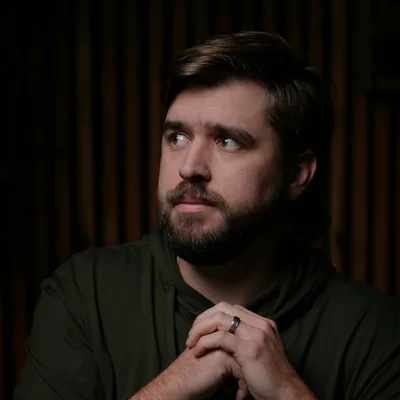
About Michael
I'm Michael, a mental health creator, recovered alcoholic, future therapist, and the host of Sober Psychology. After realizing how much of the traditional mental health conversation misses the mark, I decided to build a space dedicated to raw, unfiltered self-examination and personal healing. My approach combines psychological principles with brutal honesty and hard truths, cutting through the noise to help people navigate their own growth. No toxic positivity, no hidden shame—just real conversations about what it actually takes to heal.