soberpsychology
37 episodes tagged "soberpsychology".

Antidepressants Are Up 400%. Here’s The Catch.
Antidepressant prescriptions have skyrocketed by 400%, yet suicide rates have climbed by over 35%. Something isn't adding up. 💊🚨 In this episode of Sober Psychology, we're diving headfirst into the hardest data point in modern psychiatry. We're currently the most heavily medicated civilization in human history. Roughly 1 in 6 American adults is on a psychiatric drug. If the chemical imbalance theory was the absolute cure, our collective mental well-being should be thriving. Instead, CDC records reveal the exact opposite. The reality is that the psychiatric industrial complex has sold us a fire extinguisher filled with gasoline. We’ve traded deep, communal, and spiritual healing for a sterile, corporate transaction. You can numb a brain with a chemical band-aid, but you can't swallow a pill to manufacture purpose, build a real community, or restore your connection to your Creator while the soul bleeds to death. Let's look past the marketing and face the root cause. 🛡️✨ Do you think our culture relies too heavily on chemical fixes instead of addressing systemic and spiritual voids? Drop your perspective in the comments. 👇 If you're ready to dismantle human behavior with brutal honesty and zero sugar-coating, hit that Subscribe button. 🔔 Disclaimer: I am a psychologist in training, not a psychiatrist. Do not abruptly stop taking your psychiatric medication; always work with a medical professional to safely and slowly taper off.

The Darkest Secret in Modern Psychiatry
The medication prescribed to prevent depression is clinically proven to trigger suicidal thoughts. Let that sink in. 🚨💊 I told you I was going to give you the data, so let’s look at the darkest data point in modern psychiatry. When someone suffers from severe depression, a primary symptom is lethargy—they simply don't have the energy to act. But when they're put on an SSRI, a condition called Akathisia can kick in immediately. It's a horrific, drug-induced state of extreme inner restlessness. The alleged mood-boosting effects take weeks, but the chemical agitation happens right away. Essentially, it gives a hopeless person the sudden chemical energy required to execute a fatal plan. This is called iatrogenic harm—an illness or death caused directly by the medical treatment itself. Big Pharma and the FDA know this, but to them, it's just an acceptable statistical risk printed in tiny letters on the back of the bottle. Let's stop looking at marketing and start looking at the macro data. 🛡️✨ Did you know about the FDA's Black Box warning on antidepressants? Let's discuss the clinical data safely in the comments. 👇 If you're ready for the raw, psychological truth about human behavior, mental performance, and pharma data, hit Subscribe. 🔔 Disclaimer: I am a psychologist in training, not a psychiatrist. Do not abruptly stop taking your psychiatric medication; always work with a medical professional to safely and slowly taper off.

Stop Trying to Fix Your Parents
Stop trying to dig for water in a dry well. They're never going to see your perspective. 🛑🪞 In this episode of Sober Psychology, we’re getting brutally honest about how to manage reactive or narcissistic parents without losing your mind. The reality is simple: they refuse to accept that you're the adult now, and they had their chance. Instead of draining your emotional well trying to extract empathy that isn't there, deploy the Gray Rock Method. When you're around them, be polite and responsive, but be completely boring and emotionally flat. When they try to bait you, don't react. Change the subject, nod, and move on. Stop outsourcing your reality to their noise and start protecting your peace. 🛡️✨ Have you ever had to use the Gray Rock method on a family member? Let me know how it went in the comments below. 👇 If you're ready to break toxic generational cycles, master your mind, and get the raw psychological truths, hit Subscribe. 🔔

The Catastrophic Lie of the 1960s
Stop just screaming at the boomer rage and start looking at the actual neurobiology. 🧠⚠️ Every time I bring up this data, people flame me in the comments accusing me of making excuses for a toxic generation. But let's look at the raw science: an entire generation was chronically exposed to catastrophic levels of a severe neurotoxin during their most critical years of brain development. This isn't a pass for bad behavior—it's a neurological reality that completely warped their capacity for emotional regulation. We aren't arguing about character flaws anymore; we're dealing with compromised hardware. Let’s face the facts. Are we dealing with absolute malice, or is it just broken brain chemistry? Let’s fight it out in the comments. 👇 If you want the brutal psychological truths behind human behavior without the sugar-coating, hit Subscribe. 🔔

Your Childhood Wired You to Be Avoidant
This video explores the "latchkey generation" including Gen X and older millennials, delving into how being raised by caregivers other than parents, such as grandparents, can impact "child development." From an "attachment styles in relationships" perspective, we discuss how a parent prioritizing self-discovery over home stability can foster anxious or avoidant attachment. This often contributes to "generational trauma" and shapes "gen x psychology." Millions of Gen X and Millennials were "Latchkey Kids," spending more time with babysitters, housekeepers, or televisions than their actual parents. From an attachment theory perspective, when a parent prioritizes their own self-discovery or work over the emotional stability of a child, it wires that kid's nervous system for survival—not connection. This is the exact breeding ground for adult relationship issues. You either develop an Anxious Attachment Style (living in constant fear of abandonment and begging for reassurance) or an Avoidant Attachment Style (sabotaging closeness out of a crippling fear of losing your independence). Your struggles today aren't a mystery; they are a biological blueprint built in your childhood empty living room. Let's look at the data and break the cycle. 🧠🛡️ Were you a latchkey kid? Do you lean more Anxious or Avoidant in your relationships now? Let’s get real in the comments. 👇 If you're ready to confront the hard psychological truths, master your performance, and heal generational patterns, hit Subscribe. 🔔
They Thought They Hit a Triple...
They think they hit a triple, but they were actually born on third base. 🏃♂️💨 In this clip of our generational breakdown on Sober Psychology, we're exposing the ultimate macroeconomic delusion. Let's look at the data: buying a four-bedroom house on a basic salesman’s salary back in 1974 wasn't an act of superhero work ethic—it was a product of an incredibly unique, favorable environment. When your parents look at the modern economic brick wall you're facing and call it a "character flaw," they're protecting their own ego. They mistook a massive post-war booming economy for personal genius. It’s a profound psychological defense mechanism that makes it literally impossible for them to understand your financial reality. Stop arguing with the delusion. 🧱🛡️ Has a parent ever given you the "pull yourself up by your bootstraps" talk while completely ignoring inflation? Let me know in the comments! 👇 If you're ready to break down human behavior with brutal honesty and zero toxic positivity, hit Subscribe. 🔔

Don’t Turn Into a Pillar of Salt
Ever wonder why your parents constantly say, "Back in my day"? This video dives into the fascinating world of "cognitive biases" and "human psychology" to explain this common generational phenomenon. We explore "rosy retrospection," a bias where the brain remembers the past more positively than it actually was, offering a deeper understanding of "generational psychology." This insight into "memory" helps us understand why the 70s and 80s are often viewed through rose-tinted glasses, even when reality was different. 🧠🛡️ Does this resonate with your family's discussions about the past? Let's talk about it in the comments. 👇 If you're ready for the raw, unfiltered psychological truths to help you master your mind and break toxic cycles, hit Subscribe. 🔔

Stop Being a Prop in Their Movie
Ever notice how setting a simple boundary with your parents triggers an absolute explosion? It's not a normal disagreement—it's a battle over psychological survival. 🧠⚡ In this clip, we're tearing down the generational war over boundaries and therapy. In the traditional boomer psychological framework, compliance equals love. When you are raised in an environment of enmeshment, your subconscious role is to act as an extension of their ego—essentially a prop in their movie. When you start protecting your peace, learning emotional regulation, and finally say "no" to a holiday or an toxic pattern, their entire system treats your adult independence as a total rejection of their existence. They mock therapy because it threatens the defense mechanisms they've relied on for 40 years. Breaking enmeshment is uncomfortable, but it’s the only way to claim your true self. 🛑🛡建 Has setting a boundary ever caused a massive blowout in your family? Let’s talk about it in the comments. 👇 If you're ready for the raw, unfiltered psychological truths to help you master your mind and break toxic cycles, hit Subscribe. 🔔

It’s Not Malice... It’s Brain Damage
This episode explores the "lead-crime hypothesis" and its connection to "environmental health." We discuss how exposure to lead in the environment, a significant "public health" concern, may have impacted a generation's emotional regulation and impulse control. Understanding the neurological effects of "lead poisoning" is crucial for grasping these complex aspects of "psychology." 🧠🛡️ According to a study in the Journal of the American Medical Association (JAMA), childhood lead exposure shrinks the prefrontal cortex—the part of the brain responsible for impulse control and emotional regulation—while simultaneously enlarging the amygdala, which drives aggression. They aren't trying to be difficult; they are literally operating on compromised neurological hardware. Let's look at the data and reframe how we view the conflict. 🗺️✨ Does your family dynamic make a lot more sense after looking at this data? Let’s talk about it in the comments. 👇 If you're ready to master your mindset and uncover the brutal truths of human behavior, hit Subscribe. 🔔

Why You Ignore the Real Thing
This episode confronts the challenging reality of porn addiction, exploring the progression from casual viewing to more extreme content and the profound shame that often accompanies it. We discuss the critical role of dopamine in this cycle and the journey towards effective addiction recovery. Understanding these aspects is crucial for addressing the impact on mental health and beginning a path of healing through sex addiction treatment. 🧠🛡️ Modern digital content is the neon egg. Real relationships have flaws, friction, and boundaries. The screen gives you an airbrushed, hyper-sexualized caricature that defies physics. Just like that bird, you are numbing your nervous system and starving to death trying to mate with a simulation. It’s time to recognize the biological trap, heal the brain, and reclaim your reality. 🛡️✨ Has your instinct ever been hijacked by a "neon egg"? Let’s talk about breaking the cycle in the comments. 👇 If you're ready for the hard truths about psychology, recovery, and mental performance, hit Subscribe. 🔔

Stop Voting for Her Future Heartbreak
If you have a daughter—or ever want to have one—you need to look in the mirror right now. 🪞 I’m Michael, and as a sober dad and a psychologist in training, I’m giving you a brutal truth: your daughter won't marry someone who looks like you, but she will marry someone who treats her the way you treat her mother. Every time you hide in the bathroom to chase a five-second dopamine hit on your phone, you're teaching her that love equals distance. You're training her nervous system to tolerate emotional abandonment and setting her bar for a future husband at zero. Stop voting for her future heartbreak. Be the man you want her to marry. Now. 🥊✨ Dads, are we stepping up or are we hiding? Let’s get honest in the comments. 👇 If you're ready to break the cycle, master your performance, and face the hard psychological truths, hit Subscribe. 🔔

Cheating Isn't a Mistake, It's a Trauma
When a woman discovers "cheating," it's not just hurt feelings; it's literally PTSD, a true "shattered reality." This episode dives into the profound impact of "infidelity," exploring the concept of "betrayal trauma recovery." We discuss how such actions profoundly affect "mental health" and the long road to "healing from infidelity." Is temporary validation ever worth destroying the person who built a life with you? Drop your thoughts in the comments. 👇 If you're ready for the raw, psychological truth about relationships and mental performance, hit Subscribe. 🔔

Are You Splitting Your Partner in Half?
Our latest episode explores the "Madonna-Whore Complex," a concept in "psychology facts" that sheds light on the disconnect between love and desire. We discuss how societal conditioning and media affect "human nature" and our perceptions of "sexuality." This video offers insights into understanding the complexities of "relationships" and the impact of "sex education" on our views. 🧠🛡️ Have you ever felt conflicted about love and desire? Let's discuss in the comments below. 👇 If you're ready to master your mindset and gain clarity on these deep-seated issues, hit Subscribe. 🔔

Stop Trusting Their Mask
You aren’t surrounded by fake people because of bad luck—you’re surrounded because your nervous system is blind to the machinery of manipulation. 🧠🚫 In this episode of Sober Psychology, we’re putting the "False Self" on the operating table. Drawing on Donald Winnicott’s theory, I’m breaking down why "fakeness" is rarely born of malice—it’s a biological survival strategy. It’s a sociopathic bodyguard built to manage the optics of the room, not to protect your heart. If you trust a defense mechanism to have your back in a crisis, you're going to get slaughtered. It’s time to learn how to spot the mask before it slips. 🎭🛡️ Drop a "🎭" in the comments if you’ve ever felt like you had to wear a mask to survive. Let’s talk about it. If you’re ready for more hard-hitting psychology and mental performance strategies, hit Subscribe. 🔔

The Difference Between Vulnerability and Over-Sharing
Stop dumping your trauma on strangers and calling it "vulnerability." 🛑🧠 In this episode of Sober Psychology, we’re getting real about what true vulnerability looks like. Pop culture says you should bare your soul to everyone, but the Bible—and psychology—says something different. Vulnerability requires Covenant, not a crowd. Look at Jesus in the Garden of Gethsemane: He didn't share His deepest agony with the 5,000; He shared it with His three closest friends. Proverbs 4:23 tells us to "Guard your heart," because your identity is worth protecting. Fake people show you their wounds immediately because they have no core identity to protect—their trauma is their personality. Don't give your pearls to swine. 🛡️✨ Have you ever felt "exposed" after sharing too much too soon? Let’s talk about the difference between a crowd and a covenant in the comments. 👇 If you're ready to master your mindset and build real, guarded connections, hit Subscribe. 🔔

The Sign They’re Faking It
Ever wonder how to spot "fake people"? This video dives into "toxic behavior" like toxic agreeableness, a key indicator of a false self personality. We explore the "psychology facts" behind high self-monitoring and how it impacts "human behavior explained" as a chameleon-like tendency. Understanding these nuances is crucial for developing strong "emotional intelligence" and improving your "social skills" in building genuine "psychology of connection" with others. 🧠🛡️ Have you ever felt like you were talking to a chameleon instead of a person? Tell me about it in the comments. 👇 Ready to unmask the manipulation and master your mindset? Hit Subscribe. 🔔

Ghosting Apologies vs. Real Remorse
Ever heard an apology that felt off? This video exposes the "fake apology," where individuals apologize for your reaction, not their actions, a classic sign of "emotional manipulation." True apologies involve "accountability motivational video" and a willingness for change, as highlighted in a "repentance sermon." We also discuss "narcissistic behavior" and how it contrasts with genuine remorse. 🧠🛡️ Have you ever been hit with an "I'm sorry you feel that way" apology? Tell me how you handled it in the comments. 👇 If you're ready to stop being manipulated and start mastering your mindset, hit Subscribe. 🔔

The Anatomy of a Fake Apology
Ever confront someone about their behavior only to end up apologizing to them? 🚩🤔 That’s not a coincidence—it’s a psychological tactic called DARVO: Deny, Attack, and Reverse Victim and Offender. In this clip, I’m breaking down how "false selves" use this mechanism to avoid accountability and keep you on the defensive. If you’ve ever felt like you were "walking on eggshells," you’ve likely been caught in a DARVO trap. Let’s look at the data and take your power back. 🧠🛡️ Drop a "🚩" in the comments if you’ve experienced a DARVO apology. Let’s talk about it. If you’re ready to master your mindset and see the truth behind the mask, hit Subscribe. 🔔

They Talk Behind Your Back? Do This.
In this Sober Psychology Quickfire, Michael discusses the importance of genuine human behavior and how to spot a person lacking "honesty." He emphasizes that true "authentic" connections require emotional intelligence, urging viewers to "protect your peace" by surrounding themselves with individuals of "integrity." This approach is essential for maintaining good "mental health" and fostering meaningful "relationships." We’ve covered the behaviors, the biology, and the strategy. Now, go be uncomfortable today. Which of these three behaviors have you dealt with most this year? Let’s figure it out in the comments. 👇 If this series helped you see the truth, hit Subscribe. It’s free, and it helps us reach more people who need to hear this. 🔔

Why Confronting Fake People Always Backfires
When faced with individuals displaying a false self, attempting to "heal" or confront them often backfires. This video advocates for the use of the grey rock method to navigate such interactions, emphasizing self control. By becoming uninteresting and unresponsive, you can effectively manage manipulation and protect yourself from toxic people in your relationships. This strategy helps maintain emotional boundaries and prevents further emotional abuse. Have you ever tried the Gray Rock Method? Tell me if it worked for you in the comments! 👇

How Emotional Vampires Drain You With Vulnerability
You're being emotionally pickpocketed, and the second behavior will challenge some beliefs: weaponized vulnerability. While pop psychology often praises vulnerability, fake people have exploited this for manipulation. This video explores how emotional manipulation can corrupt genuine connection, especially within toxic relationships, turning an intended strength into a tool for control. Learn to recognize these manipulation tactics and protect your emotional safety from fake friends. Have you ever felt "forced" to care for someone you barely know? Let’s talk about it in the comments. 👇

Fake People Reveal Themselves Only After They Burn Your House Down
Many people find themselves surrounded by toxic people, not because of bad luck, but because their nervous system is blind to manipulation tactics. This video explores why most people don't recognize fake friends signs until it's too late, exposing the machinery of emotional manipulation. We're getting raw about human behavior and how to spot mind games before they cause significant harm. 🧠💔 Have you ever dealt with a "worshiping" narcissist? Tell me your story in the comments. 👇 If you’re tired of the toxic positivity and want the brutal truth about psychology, hit Subscribe. 🔔 🔗 Stream the full "Three Behaviors That Reveal a Fake Person" episode: [Link]

Are You Helping... or Using Them?
Are you really helping, or are you just hungry for self-esteem? 🧛♂️💔 Most people think being a "fixer" is a virtue, but often it’s just the shadow side of a Savior Complex. In this clip, I’m exposing the "covert contracts" we make when we trade help for loyalty. We're diving into the neurobiology of the Fixer's High—the dopamine hit you get from feeling indispensable. It’s not charity; it’s emotional vampirism. Let's get raw about why you really want to save them. Have you ever been caught in a covert contract? Tell me your story in the comments. 👇 If you're ready for the hard truths about psychology and mental performance, hit Subscribe. 🔔

The Hater's Playbook Explained
Don’t just ignore the poison—neutralize it. 🧪 Haters are playing a game built on psychological weakness. When they lash out, it’s rarely about you—it’s a mirror reflecting their own internal misery. In this clip, I’m breaking down the "playbook" of envy and cognitive dissonance. Once you see the strings, they can’t pull them anymore. 🧠🛡️ Drop a "🛡️" in the comments if you’re shielding your energy today!

Haters Are Just Noise on Your Roadmap
Ever wonder why a single mean comment feels like a punch to the gut? It’s not because you’re weak—it’s because your brain is doing exactly what it was programmed to do. 🧠💥 Thousands of years ago, social disapproval meant exile and death. Today, that same nervous system reacts to online trolls like they’re a literal threat to your survival. But here's the secret they’re terrified you’ll find out: their noise isn't a weapon—it's a roadmap to your greatness. 🗺️✨ Have you ever felt that "exile" anxiety after criticism? Let’s talk about it in the comments. 👇 Ready to master your mind and stop giving away your power? Hit that Subscribe button to join the Sober Psychology community. 🔔
Rejection Feels Like Physical Pain - Here's Why
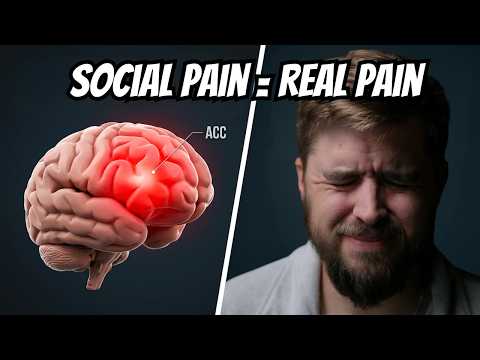
If your old drinking buddies roll their eyes at your boundaries, or a mean comment ruins your entire Tuesday, you aren’t a coward—you’re human. Your brain is hardwired to view social disapproval as a death sentence, but you aren't living in a cave anymore. In this episode of Sober Psychology, we break down the clinical biology of rejection and the "crab bucket" mentality. We explore why your upward trajectory is terrifying to those around you and how to use the "Nehemiah Blueprint" to stay on the wall and keep building. Go to the comments and tell me one piece of criticism you’ve received recently that you’re going to reframe and use as fuel. Stop letting other people's opinions write your story.

What Happens When The Demons Are Gone?
Joy actually takes courage. It takes courage to look at a beautiful day, accept that you don't deserve it, and still say thank you instead of tearing it apart to pay for your own guilt. Stop trying to pay a debt that Christ already paid. Your self-inflicted misery is an insult to the cross. If I take away your depression, your anxiety, your marital drama, and your addiction... what's left? A blank slate. And for a lot of you, that is the most terrifying image in the world. In psychology, we call this narrative identity. For years, my story was: I'm Michael. I'm a struggling alcoholic. I'm the guy fighting his demons. That was my full-time job. But what happens when the demons are gone? You are left with an identity void. When the drama stops, you actually have to figure out who you are. You have to figure out what you like to do on a Saturday. Do you like playing golf? Do you like playing video games with your kid? Do you want to learn how to edit videos? You actually have to participate in a normal, boring, beautiful human life. And normalcy is terrifying to the addict, because normalcy requires responsibility. It is time to step into the blank slate.

Are You Addicted to Chaos?
You say you want peace. You say you want sobriety. You say you want a happy marriage. But every time things get too quiet, you set your own house on fire just to remember what the smoke smells like. I’m Michael. I’m a psychologist in training, a sober dad, and today I am probably going to hurt your feelings. But if I don't, I'm not doing my job. If you've been following the channel, you know I am a recovered alcoholic. But the insidious thing about recovery is this: Sobriety isn't just putting down the bottle. It is staying away from the vibe of the bottle. And for a lot of us, the vibe of the bottle is absolute, unadulterated chaos. A few weeks ago, I was making espresso on a Saturday morning. The West Texas sun was shining, Skylar was in the other room, and my son was playing quietly. Bills were paid. Nobody was sick. It was a perfectly beautiful morning. Suddenly, my chest tightened up. I felt this venomous itch to find a problem. To check my bank account for a charge that didn't belong. To pick a fight over how the dishwasher was loaded. Why? Because when you have spent over a decade wiring your brain for disaster, peace feels like a threat. It's time to stop the self-sabotage.

You Are A Teenager With Back Pain
"You've been telling everyone you're 'finding yourself.' But you and I both know that's a lie." You're a grown man with a beard, hiding in Neverland. You avoid conflict like a disease, you wait for the women in your life to manage your basic adult responsibilities, and you use 6 hours of Call of Duty to numb out because the real world feels too hard. In psychology, we call this Peter Pan Syndrome. You are substituting real-world ambition for virtual achievements. Having a higher credit limit and back pain doesn't make you a man. Taking responsibility does. Stop using "finding yourself" as an excuse for failing to launch. It’s time to put the controller down and face reality.

Welcome to Sober Psychology (No Fluff Allowed)
Stop smiling. Let’s get real. 😐 Welcome to Sober Psychology. I’m Michael—a psychologist in training and a recovering "nice Christian boy" who used to think anger was a sin. If you are new here, here is the deal: 🚫 We don’t do fluff. 🚫 We don’t do "manifesting." We take the raw data of psychology and the gritty truth of the Bible to dismantle the lies we tell ourselves. If you are tired of pretending to be okay when you aren't, this is a safe place to be a mess. 👇 Discussion: Are you tired of the "good vibes only" culture in the church or self-help world? Let me know in the comments.

Why You Love Being Angry
You say you want to move on... but I don't believe you. 🛑 Part of you loves the anger. Why? Because anger is a stimulant. It gives you a hit of adrenaline (energy) and dopamine (reward). It makes you feel strong, while grief makes you feel weak. In this video, I explain Anger as a Secondary Emotion. Think of resentment as a "Bodyguard." He stands at the door of your heart to protect you from pain, but he's corrupt. He isn't just keeping the bad guys out; he's keeping your wife, your kids, and even God out. Stop using your trauma as social currency. As long as it pays in validation, you'll never let it go. 👇 Discussion: Be honest: Does being angry make you feel "safe" or "powerful"? Let’s talk about the addiction to righteous indignation in the comments.

Why You Can't Get Out of Bed (Polyvagal Theory)
You aren't lazy, you're just frozen. 🧊 If you think staying in bed all day is just "aesthetic" or "protecting your peace," you might actually be dealing with a chronic state of low-grade depression. In this video, I break down the Polyvagal Theory to explain why "Bed Rotting" is actually a Functional Freeze response (Dorsal Vagal Shutdown). When your nervous system is overwhelmed, it doesn't just run (fight/flight)—it plays possum to survive. We’re discussing the "Noonday Demon," dopamine fatigue, and why scrolling TikTok is actually work for your brain, not rest. 👇 Discussion: Which state are you in right now? Green (Safe), Red (Anxious), or Blue (Frozen)? Let me know in the comments.

Bed Rotting is a Dress Rehearsal for Your Funeral
You aren't resting... you're decomposing. ⚰️ Gen Z calls it "Bed Rotting" or "protecting your peace." I call it a dress rehearsal for your funeral. There is a massive difference between restoration and decay. One refuels you; the other leaves you more exhausted than when you started. If you are sleeping 10 hours a day and still waking up tired, you don't have a sleep deficit—you have a purpose deficit. In this video, we attack the epidemic of apathy. We look at the neuroscience of the Freeze Response and the ancient concept of Acedia (the spiritual demon of gloom). I’m Michael. We don't do toxic positivity here. Get up, wash your face, and let’s get to work. 👇 Discussion: Be honest: Is it "self-care," or are you just hiding from your life? Let me know in the comments.

Stop Being a Drug Dealer for the Narcissist
Everyone knows the story of Narcissus, the boy who fell in love with his own reflection. But nobody talks about Echo. 🥀 Echo was the nymph cursed to only repeat the words of others. She had no voice of her own. In this video, I explain why many partners of narcissists are actually "Echoists." You have been supporting their dreams and agreeing with their reality for so long that you have forgotten who you are. "What do you want for dinner?" "I don't know, what do you want?" Here is the hard truth: If you're an Echo, you aren't just a victim. You're a supply source. You're a drug dealer feeding the narcissist the validation they need to stay sick. The most loving thing you can do is find your own voice. 👇 Discussion: Do you feel like you've lost your own voice in your relationship? Let me know in the comments.

The Resentment Hidden Behind Kindness
⚠️ The most dangerous person in the room isn’t the villain—it’s the “nice” one. This Short dismantles Nice Guy / Nice Girl syndrome: covert contracts, the fawn response, and why people-pleasing turns kindness into control. When generosity has strings attached, it’s not love—it’s manipulation fueled by resentment.Learn why real goodness requires boundaries, why Jesus was good but not “nice,” and how to stop buying affection with favors. If you’re done being quietly furious, this is for you. 👉 Like, comment, and subscribe for straight talk on mental health, recovery, faith, and relationships.

Be a Monster. And Then Control It!
🐺 Virtue isn’t weakness—it’s controlled strength. This Short breaks down a powerful idea often attributed to Jordan Peterson: you must develop strength, boundaries, and the capacity for aggression—and then submit it to God. Being harmless isn’t holiness. Meekness is strength under control. Stop trying to be the rabbit. Find your backbone. Find your no. Become dangerous enough to be good—and choose peace on purpose. That’s how you become safe, grounded, and a person of substance. If this challenged you, like, comment, and subscribe for more unfiltered conversations on masculinity, faith, recovery, and truth.

Your Impatience is a Problem
⏳ Most chaos isn’t God’s plan — it’s your panic. This Short breaks down chaos addiction through a Biblical lens, using the story of Abraham, Sarah, and Hagar to show what happens when we try to manufacture miracles instead of trusting God’s timing. Waiting feels boring. Silence feels threatening. So we force doors that aren’t open yet — and live with the consequences for years. Here’s the hard truth: faith isn’t frantic action. Faith is the discipline of stillness. If you can’t tolerate boredom, you’ll keep injecting chaos into your life. Learn why exposure therapy for boredom retrains your brain, calms your amygdala, and breaks the addiction to stress. 👉 Like, comment, and subscribe for more faith-rooted psychology, recovery, and straight talk.