Cognitive Dissonance
7 episodes tagged "Cognitive Dissonance".

What Cognitive Dissonance Does to a Drinker's Mind
The most destructive consequence of drinking isn’t always a dramatic rock-bottom mistake. It’s the constant micro-lies you tell yourself that slowly erode your self-respect and destroy your internal locus of control. When your daily actions clash with your core values, cognitive dissonance sets in. Hiding empty cans, chewing gum, or negotiating internal boundaries doesn't just fool others—it psychologically trains your subconscious to believe your own word is worthless, creating learned helplessness across your career, fitness, and relationships. Sobriety ends the exhausting mental bandwidth of cover-up operations so you can finally look in the mirror with total clarity and let your "yes" be yes, and your "no" be no. Drop a comment: What was the biggest internal lie you caught yourself telling before making a change?
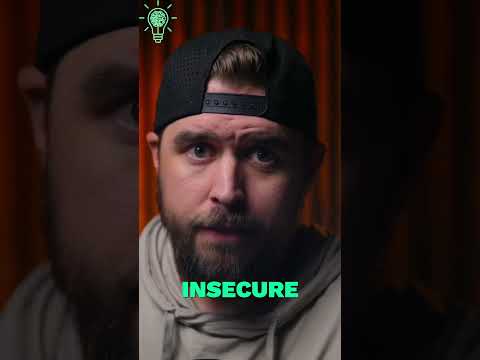
They plant seeds of doubt (Don't water them)
Are online haters getting in your head? It's time for some brutal honesty about cognitive dissonance and the psychology of projection. 🛑🧠 Haters plant seeds of doubt and desperately hope that you water them. But why do they do it? When someone’s core belief is that change is impossible, and they watch you actually change your life, it triggers massive cognitive dissonance in their brain. To relieve that psychological pain, they have two options: admit they’ve been lazy (which requires a massive ego death), or invalidate you. So, they project. The things haters criticize in you are almost always the things they despise about themselves. The person calling you arrogant is likely deeply insecure. Their attacks are just a defensive mechanism to protect their own fragile reality. Without their digital masks, they are weak, which is why they would never say it to your face. Stop watering their seeds of doubt. 💬 Let me know in the comments: Have you ever noticed a hater projecting their own insecurities onto you? 👇 If you needed this reality check today, hit that LIKE button and SUBSCRIBE to Sober Psychology for more raw truth on mental health, human behavior, and breaking toxic cycles.

Slip vs. Relapse: The psychology that saves lives
In recovery, it's easy to fall into the trap of perfectionism, where a single slip-up can lead to a full-blown relapse. This video explores the concept of catastrophizing and how it can derail your sobriety journey. Understanding this psychological process is crucial for effective addiction recovery and maintaining long-term mental health. 💔🧠 💬 Let me know in the comments: Have you ever fallen into the trap of the Abstinence Violation Effect? Be honest. 👇 If this helped you reframe your setbacks, hit that LIKE button and SUBSCRIBE to for more raw, clinical truths on mental health, recovery, and breaking toxic cycles.

Predictable Misery vs Unpredictable Happiness |
Does a quiet, peaceful evening trigger your fight-or-flight response? Let's talk about the "Boss Fight" theory of trauma and the Upper Limit Problem. 🎮🧠 If you play video games, you know exactly what it means when you're walking through a hallway, there are health packs everywhere, and the music suddenly stops. You're gearing up for a boss fight. That is exactly how a traumatized brain treats a quiet Tuesday evening with Skylar. You're bracing for impact. We don't choose misery because we enjoy it; we choose it because it's predictable. Misery is the ultimate insurance policy against disappointment. If you pull the trigger and ruin the relationship yourself, at least you were the one in control. Psychologist Gay Hendricks calls this the "Upper Limit Problem." We all have an internal thermostat for joy. When things get "too good," we trip a subconscious wire and sabotage our own lives to bring the temperature back down to our baseline of chaos. It's time to recognize the pattern and stop turning on the AC. 💬 Let me know in the comments: Do you subconsciously treat peaceful moments like the calm before a boss fight? 👇 If this reframe helped you today, hit that LIKE button and SUBSCRIBE for more raw truths on psychology, breaking toxic cycles, and taking your mind back.

Why your brain panics when you succeed |
How do you go from having a great week to standing in the rubble of an argument you started? Let's talk about the Upper Limit Problem. 🛑🧠 Have you ever noticed that right after a big win—like a promotion or a great date night with your wife—you suddenly pick a fight, miss a deadline, or relapse? Psychologist Gay Hendricks calls this the "Upper Limit Problem." Every single one of us has an internal thermostat for how much joy, love, or success we can tolerate. When things get too good, you trip a subconscious wire. Your brain panics and turns on the AC to freeze the room back down to a temperature you're used to. Why do we do this? Cognitive dissonance. If deep down in the basement of your soul you believe you're fundamentally broken, then good things happening to you feel like a scam. It's time to recognize the AC turning on and learn how to reset your thermostat. 💬 Let me know in the comments: What is your brain's favorite way to "turn on the AC" and self-sabotage when things are going well? 👇 If this helped explain your own behavior today, hit that LIKE button and SUBSCRIBE to Sober Psychology for more clinical truths on breaking toxic cycles and healing your core beliefs.

How to practice distress tolerance like a pro |
Are you using God's grace as a dopamine hit to excuse your own self-destruction? Let's talk about cognitive dissonance and distress tolerance. 🛑✝️ It's incredibly easy to use the mercy of God as a hall pass when your brain is desperate for a way out. But real grace is costly. It empowers you to stare a craving in the face and say, "Nope. I was bought with a price. God already saved me, which is exactly why we aren't doing this." We've talked about the basal ganglia, the extinction burst, and the illusion of control. But what do you actually do on a Tuesday night at 8:00 PM when the walls are closing in? You practice distress tolerance. You stop trying to eliminate the anxiety or "feel good." You simply prove to your nervous system that you can survive the discomfort without hitting the self-destruct button. 💬 Let me know in the comments: What is your go-to method for practicing distress tolerance when the cravings hit? 👇 If this gave you the reframe you needed today, hit that LIKE button and SUBSCRIBE to Sober Psychology for more raw truth on faith, mental health, and breaking the cycle.

Slip vs. Relapse: The psychology that saves lives |
Are you weaponizing your own perfectionism against yourself? Let’s talk about the "f*-it switch" and the Abstinence Violation Effect. 🛑🧠** Have you ever broken a 300-day streak and immediately thought, "Well, I already blew it, I might as well burn the whole house down"? In the rooms, we call it the "f***-it switch." In psychology, it's called the Abstinence Violation Effect (AVE). When you slip up, your brain experiences massive cognitive dissonance and weaponizes your perfectionism. But perfectionism is not a virtue in recovery—it's a trapdoor. A slip is a lapse in behavior; a relapse is a lapse in identity. If you drop your phone and scratch it, you don't pick up a hammer and smash the screen to dust. You pick it up and keep walking. You're not a streak of days; you're a human being learning how to walk. Defeat the AVE today. 💬 Let me know in the comments: Have you ever fallen into the trap of the Abstinence Violation Effect? Be honest. 👇 If this helped you reframe your setbacks, hit that LIKE button and SUBSCRIBE for more raw, clinical truths on psychology, recovery, and breaking toxic cycles.