mentalhealth
43 episodes tagged "mentalhealth".

Antidepressants Are Up 400%. Here’s The Catch.
Antidepressant prescriptions have skyrocketed by 400%, yet suicide rates have climbed by over 35%. Something isn't adding up. 💊🚨 In this episode of Sober Psychology, we're diving headfirst into the hardest data point in modern psychiatry. We're currently the most heavily medicated civilization in human history. Roughly 1 in 6 American adults is on a psychiatric drug. If the chemical imbalance theory was the absolute cure, our collective mental well-being should be thriving. Instead, CDC records reveal the exact opposite. The reality is that the psychiatric industrial complex has sold us a fire extinguisher filled with gasoline. We’ve traded deep, communal, and spiritual healing for a sterile, corporate transaction. You can numb a brain with a chemical band-aid, but you can't swallow a pill to manufacture purpose, build a real community, or restore your connection to your Creator while the soul bleeds to death. Let's look past the marketing and face the root cause. 🛡️✨ Do you think our culture relies too heavily on chemical fixes instead of addressing systemic and spiritual voids? Drop your perspective in the comments. 👇 If you're ready to dismantle human behavior with brutal honesty and zero sugar-coating, hit that Subscribe button. 🔔 Disclaimer: I am a psychologist in training, not a psychiatrist. Do not abruptly stop taking your psychiatric medication; always work with a medical professional to safely and slowly taper off.

The Darkest Secret in Modern Psychiatry
The medication prescribed to prevent depression is clinically proven to trigger suicidal thoughts. Let that sink in. 🚨💊 I told you I was going to give you the data, so let’s look at the darkest data point in modern psychiatry. When someone suffers from severe depression, a primary symptom is lethargy—they simply don't have the energy to act. But when they're put on an SSRI, a condition called Akathisia can kick in immediately. It's a horrific, drug-induced state of extreme inner restlessness. The alleged mood-boosting effects take weeks, but the chemical agitation happens right away. Essentially, it gives a hopeless person the sudden chemical energy required to execute a fatal plan. This is called iatrogenic harm—an illness or death caused directly by the medical treatment itself. Big Pharma and the FDA know this, but to them, it's just an acceptable statistical risk printed in tiny letters on the back of the bottle. Let's stop looking at marketing and start looking at the macro data. 🛡️✨ Did you know about the FDA's Black Box warning on antidepressants? Let's discuss the clinical data safely in the comments. 👇 If you're ready for the raw, psychological truth about human behavior, mental performance, and pharma data, hit Subscribe. 🔔 Disclaimer: I am a psychologist in training, not a psychiatrist. Do not abruptly stop taking your psychiatric medication; always work with a medical professional to safely and slowly taper off.

Stop Trying to Fix Your Parents
Stop trying to dig for water in a dry well. They're never going to see your perspective. 🛑🪞 In this episode of Sober Psychology, we’re getting brutally honest about how to manage reactive or narcissistic parents without losing your mind. The reality is simple: they refuse to accept that you're the adult now, and they had their chance. Instead of draining your emotional well trying to extract empathy that isn't there, deploy the Gray Rock Method. When you're around them, be polite and responsive, but be completely boring and emotionally flat. When they try to bait you, don't react. Change the subject, nod, and move on. Stop outsourcing your reality to their noise and start protecting your peace. 🛡️✨ Have you ever had to use the Gray Rock method on a family member? Let me know how it went in the comments below. 👇 If you're ready to break toxic generational cycles, master your mind, and get the raw psychological truths, hit Subscribe. 🔔

The Catastrophic Lie of the 1960s
Stop just screaming at the boomer rage and start looking at the actual neurobiology. 🧠⚠️ Every time I bring up this data, people flame me in the comments accusing me of making excuses for a toxic generation. But let's look at the raw science: an entire generation was chronically exposed to catastrophic levels of a severe neurotoxin during their most critical years of brain development. This isn't a pass for bad behavior—it's a neurological reality that completely warped their capacity for emotional regulation. We aren't arguing about character flaws anymore; we're dealing with compromised hardware. Let’s face the facts. Are we dealing with absolute malice, or is it just broken brain chemistry? Let’s fight it out in the comments. 👇 If you want the brutal psychological truths behind human behavior without the sugar-coating, hit Subscribe. 🔔

Your Childhood Wired You to Be Avoidant
This video explores the "latchkey generation" including Gen X and older millennials, delving into how being raised by caregivers other than parents, such as grandparents, can impact "child development." From an "attachment styles in relationships" perspective, we discuss how a parent prioritizing self-discovery over home stability can foster anxious or avoidant attachment. This often contributes to "generational trauma" and shapes "gen x psychology." Millions of Gen X and Millennials were "Latchkey Kids," spending more time with babysitters, housekeepers, or televisions than their actual parents. From an attachment theory perspective, when a parent prioritizes their own self-discovery or work over the emotional stability of a child, it wires that kid's nervous system for survival—not connection. This is the exact breeding ground for adult relationship issues. You either develop an Anxious Attachment Style (living in constant fear of abandonment and begging for reassurance) or an Avoidant Attachment Style (sabotaging closeness out of a crippling fear of losing your independence). Your struggles today aren't a mystery; they are a biological blueprint built in your childhood empty living room. Let's look at the data and break the cycle. 🧠🛡️ Were you a latchkey kid? Do you lean more Anxious or Avoidant in your relationships now? Let’s get real in the comments. 👇 If you're ready to confront the hard psychological truths, master your performance, and heal generational patterns, hit Subscribe. 🔔

Stop Being a Prop in Their Movie
Ever notice how setting a simple boundary with your parents triggers an absolute explosion? It's not a normal disagreement—it's a battle over psychological survival. 🧠⚡ In this clip, we're tearing down the generational war over boundaries and therapy. In the traditional boomer psychological framework, compliance equals love. When you are raised in an environment of enmeshment, your subconscious role is to act as an extension of their ego—essentially a prop in their movie. When you start protecting your peace, learning emotional regulation, and finally say "no" to a holiday or an toxic pattern, their entire system treats your adult independence as a total rejection of their existence. They mock therapy because it threatens the defense mechanisms they've relied on for 40 years. Breaking enmeshment is uncomfortable, but it’s the only way to claim your true self. 🛑🛡建 Has setting a boundary ever caused a massive blowout in your family? Let’s talk about it in the comments. 👇 If you're ready for the raw, unfiltered psychological truths to help you master your mind and break toxic cycles, hit Subscribe. 🔔

Stop Trusting Their Mask
You aren’t surrounded by fake people because of bad luck—you’re surrounded because your nervous system is blind to the machinery of manipulation. 🧠🚫 In this episode of Sober Psychology, we’re putting the "False Self" on the operating table. Drawing on Donald Winnicott’s theory, I’m breaking down why "fakeness" is rarely born of malice—it’s a biological survival strategy. It’s a sociopathic bodyguard built to manage the optics of the room, not to protect your heart. If you trust a defense mechanism to have your back in a crisis, you're going to get slaughtered. It’s time to learn how to spot the mask before it slips. 🎭🛡️ Drop a "🎭" in the comments if you’ve ever felt like you had to wear a mask to survive. Let’s talk about it. If you’re ready for more hard-hitting psychology and mental performance strategies, hit Subscribe. 🔔

The Difference Between Vulnerability and Over-Sharing
Stop dumping your trauma on strangers and calling it "vulnerability." 🛑🧠 In this episode of Sober Psychology, we’re getting real about what true vulnerability looks like. Pop culture says you should bare your soul to everyone, but the Bible—and psychology—says something different. Vulnerability requires Covenant, not a crowd. Look at Jesus in the Garden of Gethsemane: He didn't share His deepest agony with the 5,000; He shared it with His three closest friends. Proverbs 4:23 tells us to "Guard your heart," because your identity is worth protecting. Fake people show you their wounds immediately because they have no core identity to protect—their trauma is their personality. Don't give your pearls to swine. 🛡️✨ Have you ever felt "exposed" after sharing too much too soon? Let’s talk about the difference between a crowd and a covenant in the comments. 👇 If you're ready to master your mindset and build real, guarded connections, hit Subscribe. 🔔

The Sign They’re Faking It
Ever wonder how to spot "fake people"? This video dives into "toxic behavior" like toxic agreeableness, a key indicator of a false self personality. We explore the "psychology facts" behind high self-monitoring and how it impacts "human behavior explained" as a chameleon-like tendency. Understanding these nuances is crucial for developing strong "emotional intelligence" and improving your "social skills" in building genuine "psychology of connection" with others. 🧠🛡️ Have you ever felt like you were talking to a chameleon instead of a person? Tell me about it in the comments. 👇 Ready to unmask the manipulation and master your mindset? Hit Subscribe. 🔔

Ghosting Apologies vs. Real Remorse
Ever heard an apology that felt off? This video exposes the "fake apology," where individuals apologize for your reaction, not their actions, a classic sign of "emotional manipulation." True apologies involve "accountability motivational video" and a willingness for change, as highlighted in a "repentance sermon." We also discuss "narcissistic behavior" and how it contrasts with genuine remorse. 🧠🛡️ Have you ever been hit with an "I'm sorry you feel that way" apology? Tell me how you handled it in the comments. 👇 If you're ready to stop being manipulated and start mastering your mindset, hit Subscribe. 🔔

The Anatomy of a Fake Apology
Ever confront someone about their behavior only to end up apologizing to them? 🚩🤔 That’s not a coincidence—it’s a psychological tactic called DARVO: Deny, Attack, and Reverse Victim and Offender. In this clip, I’m breaking down how "false selves" use this mechanism to avoid accountability and keep you on the defensive. If you’ve ever felt like you were "walking on eggshells," you’ve likely been caught in a DARVO trap. Let’s look at the data and take your power back. 🧠🛡️ Drop a "🚩" in the comments if you’ve experienced a DARVO apology. Let’s talk about it. If you’re ready to master your mindset and see the truth behind the mask, hit Subscribe. 🔔

They Talk Behind Your Back? Do This.
In this Sober Psychology Quickfire, Michael discusses the importance of genuine human behavior and how to spot a person lacking "honesty." He emphasizes that true "authentic" connections require emotional intelligence, urging viewers to "protect your peace" by surrounding themselves with individuals of "integrity." This approach is essential for maintaining good "mental health" and fostering meaningful "relationships." We’ve covered the behaviors, the biology, and the strategy. Now, go be uncomfortable today. Which of these three behaviors have you dealt with most this year? Let’s figure it out in the comments. 👇 If this series helped you see the truth, hit Subscribe. It’s free, and it helps us reach more people who need to hear this. 🔔

Why Confronting Fake People Always Backfires
When faced with individuals displaying a false self, attempting to "heal" or confront them often backfires. This video advocates for the use of the grey rock method to navigate such interactions, emphasizing self control. By becoming uninteresting and unresponsive, you can effectively manage manipulation and protect yourself from toxic people in your relationships. This strategy helps maintain emotional boundaries and prevents further emotional abuse. Have you ever tried the Gray Rock Method? Tell me if it worked for you in the comments! 👇

How Emotional Vampires Drain You With Vulnerability
You're being emotionally pickpocketed, and the second behavior will challenge some beliefs: weaponized vulnerability. While pop psychology often praises vulnerability, fake people have exploited this for manipulation. This video explores how emotional manipulation can corrupt genuine connection, especially within toxic relationships, turning an intended strength into a tool for control. Learn to recognize these manipulation tactics and protect your emotional safety from fake friends. Have you ever felt "forced" to care for someone you barely know? Let’s talk about it in the comments. 👇

Fake People Reveal Themselves Only After They Burn Your House Down
Many people find themselves surrounded by toxic people, not because of bad luck, but because their nervous system is blind to manipulation tactics. This video explores why most people don't recognize fake friends signs until it's too late, exposing the machinery of emotional manipulation. We're getting raw about human behavior and how to spot mind games before they cause significant harm. 🧠💔 Have you ever dealt with a "worshiping" narcissist? Tell me your story in the comments. 👇 If you’re tired of the toxic positivity and want the brutal truth about psychology, hit Subscribe. 🔔 🔗 Stream the full "Three Behaviors That Reveal a Fake Person" episode: [Link]
Stop Trying to Fix People
Why is your best friend always in a crisis, and why do you keep dating "projects"? 🚩 It’s time for some brutal honesty: Healthy, secure adults don’t tolerate rescuers. When you try to over-function for someone who is stable, they’ll tell you to back off. To a rescuer, that boundary feels like rejection. This is why you subconsciously seek out "emotional black holes"—people with narcissism or severe codependency who will gladly consume every bit of energy you give. A narcissist needs a worshiper, and a rescuer needs a project. It’s a match made in psychological hell. Does this cycle sound familiar? Let’s talk about it in the comments. 👇 If you’re ready to break the cycle and master your mindset, hit Subscribe. 🔔

Are You Helping... or Using Them?
Are you really helping, or are you just hungry for self-esteem? 🧛♂️💔 Most people think being a "fixer" is a virtue, but often it’s just the shadow side of a Savior Complex. In this clip, I’m exposing the "covert contracts" we make when we trade help for loyalty. We're diving into the neurobiology of the Fixer's High—the dopamine hit you get from feeling indispensable. It’s not charity; it’s emotional vampirism. Let's get raw about why you really want to save them. Have you ever been caught in a covert contract? Tell me your story in the comments. 👇 If you're ready for the hard truths about psychology and mental performance, hit Subscribe. 🔔

Haters Are Just Noise on Your Roadmap
Ever wonder why a single mean comment feels like a punch to the gut? It’s not because you’re weak—it’s because your brain is doing exactly what it was programmed to do. 🧠💥 Thousands of years ago, social disapproval meant exile and death. Today, that same nervous system reacts to online trolls like they’re a literal threat to your survival. But here's the secret they’re terrified you’ll find out: their noise isn't a weapon—it's a roadmap to your greatness. 🗺️✨ Have you ever felt that "exile" anxiety after criticism? Let’s talk about it in the comments. 👇 Ready to master your mind and stop giving away your power? Hit that Subscribe button to join the Sober Psychology community. 🔔

Haters Are Watching… Give Them a Show
It's time to reframe negative comments, moving from a victim mindset to a director's perspective. Discipline is key, so let's break down the four acts of your new show, emphasizing how to handle criticism as data, not attacks. This approach helps you reclaim your self worth and fosters significant personal growth, which is crucial for your mental health. 🛑🧠 Watch the full video and let me know which act resonated with you more? Let me know in the comments! 👇 If you’re ready to master your mindset and stop self-sabotaging, hit that Subscribe button and join the community. 🔔 🔗 Listen to the full Sober Psychology podcast on Spotify: https://open.spotify.com/show/6R9R9RhnrgZmStPb3hNkN0?si=17cd6c57f26049aa

Arguing with trolls is like wrestling a pig
Are you terrified to hit publish because of what people might say? Let's talk about the 10-Second Rule and psychological hygiene. 🛑🧠 Every time you enforce a boundary or post a polarizing video, your biological alarm bells are going to scream. You have exactly 10 seconds to notice that fear and say it out loud: your brain thinks you're being cast out of the cave and a wolf is coming to eat you. Acknowledge the data, and then hit publish anyway. Once you are on the stage, you have to master your engagement. Most of your haters deserve absolutely nothing. Engaging with a troll is like wrestling a pig in the mud—you both get dirty, but the pig actually enjoys it. Blocking and deleting are not tools of weakness; they are instruments of psychological hygiene. Silence is a power move. But for the skeptics? Disarm them from a place of strength. Remember: your public response to a hater is rarely for the hater. It’s for everyone else watching. Kill them with kindness and demonstrate leadership. 💬 Let me know in the comments: Have you ever been guilty of "wrestling the pig" in the comment section? 👇 If this helped you master your online stage today, hit that LIKE button and SUBSCRIBE for more raw truth on psychology, content creation, and brutal honesty.
Rejection Feels Like Physical Pain - Here's Why
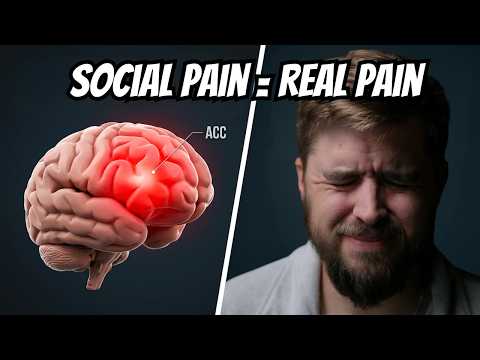
If your old drinking buddies roll their eyes at your boundaries, or a mean comment ruins your entire Tuesday, you aren’t a coward—you’re human. Your brain is hardwired to view social disapproval as a death sentence, but you aren't living in a cave anymore. In this episode of Sober Psychology, we break down the clinical biology of rejection and the "crab bucket" mentality. We explore why your upward trajectory is terrifying to those around you and how to use the "Nehemiah Blueprint" to stay on the wall and keep building. Go to the comments and tell me one piece of criticism you’ve received recently that you’re going to reframe and use as fuel. Stop letting other people's opinions write your story.

Grieving a Toxic Parent Who is Still Alive (The Mother Wound) w/ Barbie.
If you've ever had to protect your peace by walking away from a toxic family dynamic, you are not alone. In this episode of Sober Psychology, I am joined by my good friend Barbie Hahn to unpack the reality of the mother wound and surviving a childhood warzone. We explore how different Enneagram types process trauma (7w8 vs. 8w7) , the unique pain of grieving a parent who is still alive , and how to reconcile faith with the necessity of hard boundaries. Barbie shares her incredible journey from escaping chaos to finding a steady anchor, and leaves us with one of the most powerful pieces of advice: how to be your own mom. Don't be a jerk, just subscribe! Keep your head up, keep your heart open, and go help somebody. Barbie makes incredible content on her Instagram account. You can find that here: https://www.instagram.com/barbiehahna/

Drowning in Your Own Defense Mechanism
"You're exhausted—not because your life is hard, but because you're running a 24/7 PR campaign to convince yourself that you're happy." Let's look at the mechanics of the mind. Freud called it repression. When you shove a painful thought, trauma, or grief into your unconscious, you are essentially trying to hold a giant, inflatable beach ball underwater. Does the ball go away? No. It stays right there. But now you have to use constant, draining energy to keep it submerged while standing there shaking, smiling, and telling everyone, "I'm fine." As a psychologist in training, I have to tell you the hard truth: You can't swim, you can't play, and you can't connect with anyone while you're holding that ball down. The exact energy it takes to pretend you aren't sad is the energy you need in order to heal. It is time to let the beach ball surface.

You Aren't A Monster. You're Just A Junkie.
"I know what you're watching, and I know you're terrified someone will find out." You started with the "vanilla" stuff. But eventually, that got boring. Now, you're clicking on violence, taboo scenarios, or things that don't even match your sexual orientation. You think, "I'm a monster. This is who I really am." Stop. You aren't a monster. You're a junkie building tolerance. Just like a heroin addict needs a lethal dose to feel a "buzz," your brain has become so desensitized to normal stimuli that it requires SHOCK—fear, disgust, and taboo—just to release dopamine. The adrenaline of the "shock" is the only thing that wakes up your dead nervous system. You don't want these things in real life. If it happened in your living room, you’d be sick. The content is just a symptom. Heal the brain, and the fetishes disappear.

Stop Saying "I Feel Bad" (Do This Instead)
Wallowing in misery? Hell no. 🛑 The alternative is Emotional Granularity. Neuroscientist Lisa Feldman Barrett found that people who can specifically name their emotions are healthier and more resilient. Instead of saying "I feel bad," they say "I feel humiliated" or "I feel betrayed." When you name the demon, you tame the demon. In the Bible, this is called Lament. It isn't disrespectful to bring your raw, unfiltered complaints to God—it is the highest form of trust. It says, "God, I trust you enough to show you my ugly." The "nice guy Christian" hides his ugly. The real Christian brings it to the altar. 👇 Discussion: Look at the emotion wheel. Instead of "bad," what are you actually feeling today? Tell me in the comments.
Stop Running a PR Campaign for Your Life
You aren't exhausted because your life is hard. You are exhausted because you are running a 24/7 PR campaign to convince yourself that you are happy. 📉 In this video, I break down Sigmund Freud’s concept of Repression using the "Beach Ball Metaphor." Imagine your trauma or anger is a giant inflatable beach ball. You don't want anyone to see it, so you shove it underwater. Does the ball go away? No. It takes constant, shaking energy to keep it submerged. You can't swim, you can't play, and you can't hug anyone because your hands are busy holding down the truth. The energy you use to pretend you're "fine" is the exact same energy you need to heal. 👇 Discussion: What "beach ball" are you tired of holding down today? Let's talk about it in the comments.

Welcome to Sober Psychology (No Fluff Allowed)
Stop smiling. Let’s get real. 😐 Welcome to Sober Psychology. I’m Michael—a psychologist in training and a recovering "nice Christian boy" who used to think anger was a sin. If you are new here, here is the deal: 🚫 We don’t do fluff. 🚫 We don’t do "manifesting." We take the raw data of psychology and the gritty truth of the Bible to dismantle the lies we tell ourselves. If you are tired of pretending to be okay when you aren't, this is a safe place to be a mess. 👇 Discussion: Are you tired of the "good vibes only" culture in the church or self-help world? Let me know in the comments.

Why Jesus Wept (He Didn’t Fake Being Happy)
"I'm too blessed to be stressed." (While their left eye is twitching). 🥴 We all know that person. They treat negative emotions like radiation. But here is the hard truth: You aren't being positive; you are dissociating. In this video, I explain Spiritual Bypassing—the act of using God as a drug to numb the reality of your life. The danger is simple: If you numb the dark, you also numb the light. You cannot heal what you do not feel. Even Jesus wept (John 11:35). He knew He was about to raise Lazarus, yet He still stood in the tragedy and felt it. Stop faking it. 👇 Discussion: When someone asks "How are you?", do you lie and say "I'm fine"? Tell me the truth in the comments today.

Your Anger is Literally Eating You Alive
Your hate is literally eating you alive. 🦴 Research shows a massive correlation between repressed anger and autoimmune diseases, cancer, and chronic pain. When you hold onto resentment, your body is stuck in chronic fight-or-flight mode. You're dripping cortisol into your bloodstream 24/7. This shuts down your immune system, raises your blood pressure, and eats away at your hippocampus (memory). This validates Proverbs 14:30: "A heart at peace gives life to the body, but envy rots the bones." That isn't just poetry; it’s biology. The body screams what the mouth refuses to say. If you won't forgive for your soul, do it for your arteries. 👇 Discussion: Do you have "mystery pain" (back, stomach, migraines) that flares up when you are stressed or angry? Let me know in the comments.
Trauma is the Wound, Resentment is the Scab
Trauma is what happens to you. Resentment is what you keep. 🛑 Trauma is a wound, but resentment is picking the scab every morning so it never heals. In this video, I break down the actual definition of Resentment. It comes from the Latin re-sentire, which means "to feel again" or "re-feel". When you ruminate on the past, your brain doesn't know the difference between the memory and the event. Your amygdala fires and your body prepares for a fight that happened 10 years ago. You are trapping yourself in a time loop. You’re living in a haunted house, but you are the ghost. 👇 Discussion: Are you "picking the scab" of a past hurt? What would happen if you finally let it heal? Tell me below.

You Can't Be a Victim and a Victor
"As I walked out the door towards the gate that would lead to my freedom, I knew if I didn't leave my bitterness and hatred behind, I'd still be in prison." — Nelson Mandela Nelson Mandela spent 27 years in prison, yet he knew that holding onto resentment was a self-imposed life sentence. In this video, I want to remind you that you are standing at the gate. The war is over. You can spend the rest of your life gripping the bars and waiting for an apology that may never come, or you can walk out and live. You cannot be a victim and a victor at the same time. You have to choose. 👇 Discussion: What is one thing you need to leave behind at the gate today? Declare it in the comments.

You Are The Unforgiving Servant
You're walking around choking people for $50 debts when God canceled your $100 million debt. 💸 In this video, we dive into the Parable of the Unforgiving Servant (Matthew 18). Psychology explains the mechanism of resentment, but theology explains the solution. Forgiveness isn't a feeling; it is a financial transaction. It’s admitting, "I made a bad investment, and I'm cashing out with what little dignity I have left." If you refuse to forgive, you're handing yourself over to the "torturers"—anxiety, depression, and bitterness. You're living in a torture chamber of your own making. 👇 Discussion: Are you holding onto a "debt" (an apology, money, time) that you need to cancel today? Let me know in the comments.
Resentment is More Addictive Than Cocaine
"Resentment is like drinking poison and expecting the other person to die." ☠️ We've all heard the quote, but here is the hard truth nobody tells you: You like the taste of the poison. In this video, I explain why resentment is actually an addiction. In the courtroom of your mind, being the "righteous victim" releases dopamine. It makes you feel morally superior. But while you are high on self-righteousness, your soul is rotting. We are breaking down the Zeigarnik Effect (why you can't stop ruminating) and the "Root of Bitterness" (Hebrews 12:15). Put down the poison. Let them go—not because they deserve it, but because you deserve to be free. 👇 Discussion: Are you holding onto a grudge because it makes you feel powerful? Be honest in the comments.

Why You Love Being Angry
You say you want to move on... but I don't believe you. 🛑 Part of you loves the anger. Why? Because anger is a stimulant. It gives you a hit of adrenaline (energy) and dopamine (reward). It makes you feel strong, while grief makes you feel weak. In this video, I explain Anger as a Secondary Emotion. Think of resentment as a "Bodyguard." He stands at the door of your heart to protect you from pain, but he's corrupt. He isn't just keeping the bad guys out; he's keeping your wife, your kids, and even God out. Stop using your trauma as social currency. As long as it pays in validation, you'll never let it go. 👇 Discussion: Be honest: Does being angry make you feel "safe" or "powerful"? Let’s talk about the addiction to righteous indignation in the comments.

God Didn’t Call Him Lazy (He Gave Him a Snack)
Sometimes, you aren't lazy. You are empty. 📉 I know people will say, "But Michael, I have depression," or "I'm burnt out." I hear you, and so does the Bible. In this video, we look at 1 Kings 19 and the story of Prophet Elijah. After fighting battles and outrunning chariots, he crashed under a broom tree and wanted to give up. Watch how God responded: He didn't send a lecture on laziness. He sent an angel with a snack and a nap. 🍞💤 The crucial difference: • Rest is refueling so you can get back in the fight (Restoration). • Rot is eating snacks and napping to avoid the fight forever (Escape). Elijah didn't build a house under that tree. He rested, then he moved on. Which one are you doing today? 👇 Discussion: Be honest: Are you in a season of "Broom Tree" rest, or have you slipped into avoidance/rot? Let me know in the comments.

Why You Feel Like a Zombie Today
You aren't resting... you're drifting into a "zombie state." 🧟 If you stay in a dark room all day with the curtains drawn, you are confusing your body's internal clock. You are messing with your Circadian Rhythm so badly that your brain thinks the apocalypse has started. In this video, I explain the Comfort Paradox: We live in the most comfortable time in history, yet our threshold for pain is lower than ever. When we remove all friction, even small tasks (like showering) feel impossible. It feels safer to rot, but you were not made to rot. You were made to rise. 👇 Discussion: Do you feel more "zombie-like" after a day of bed rotting compared to a busy day? Let me know in the comments.

Stop Confusing "Uncomfortable" With "Unsafe"
Taking a shower feels like climbing Everest? Answering an email feels like emotional warfare? 🏔️ You aren't broken—you are deconditioned. In this video, I explain why "bed rotting" is actually a safety behavior that creates an "Anxiety Soup." You are feeding your brain high dopamine (screens) with low physical output. Your brain is running a marathon while your body is paralyzed. The world isn't too hard; you've just stopped lifting the "life weights." It’s time to relearn the difference between being unsafe and just being uncomfortable. 👇 Discussion: Be honest: Do you feel more exhausted after scrolling for 2 hours than you do after working out? Let me know below.

Why You Can't Get Out of Bed (Polyvagal Theory)
You aren't lazy, you're just frozen. 🧊 If you think staying in bed all day is just "aesthetic" or "protecting your peace," you might actually be dealing with a chronic state of low-grade depression. In this video, I break down the Polyvagal Theory to explain why "Bed Rotting" is actually a Functional Freeze response (Dorsal Vagal Shutdown). When your nervous system is overwhelmed, it doesn't just run (fight/flight)—it plays possum to survive. We’re discussing the "Noonday Demon," dopamine fatigue, and why scrolling TikTok is actually work for your brain, not rest. 👇 Discussion: Which state are you in right now? Green (Safe), Red (Anxious), or Blue (Frozen)? Let me know in the comments.

Bed Rotting is a Dress Rehearsal for Your Funeral
You aren't resting... you're decomposing. ⚰️ Gen Z calls it "Bed Rotting" or "protecting your peace." I call it a dress rehearsal for your funeral. There is a massive difference between restoration and decay. One refuels you; the other leaves you more exhausted than when you started. If you are sleeping 10 hours a day and still waking up tired, you don't have a sleep deficit—you have a purpose deficit. In this video, we attack the epidemic of apathy. We look at the neuroscience of the Freeze Response and the ancient concept of Acedia (the spiritual demon of gloom). I’m Michael. We don't do toxic positivity here. Get up, wash your face, and let’s get to work. 👇 Discussion: Be honest: Is it "self-care," or are you just hiding from your life? Let me know in the comments.

Why "Bed Rotting" Makes You Tired
If you lie in bed for 6 hours and feel worse, you weren't resting—you were hiding. 🛑 "Bed Rotting" is trending, but we need to talk about the biology behind it. When you are overwhelmed by life, your body hits the emergency brake. You enter a "freeze" response—like a possum playing dead. In this video, I explain why rotting consumes energy while true rest creates it. We also look at the science of your Circadian Rhythm. By staying in a dark room, you are confusing your Suprachiasmatic Nucleus (SCN). You are missing that crucial morning cortisol spike that tells your brain, "The apocalypse isn't happening, it's just Tuesday." Get some sunlight. Stop the rot. 👇 Discussion: Do you feel energized or drained after a "bed rot" day? Let me know in the comments.

Why You’re Obsessed (It’s Not Love)
Limerence isn't just "love"—it’s the ultimate painkiller. 🚩 If you are focusing 100% of your energy on them, it’s usually a distraction so you don't have to look at you. It’s a way to avoid your own trauma, your career, and your relationship with God. In this video, I break down why the Bible calls this "idolatry" (Romans 1:25). We look at the story of Leah and Jacob to show what happens when you ask a flawed human being to do the job of God. Humans make terrible gods—they crumble, leave, and disappoint. Stop looking for a Savior in a partner. 👇 Discussion: Have you ever realized your obsession was actually a distraction from your own pain? Let me know in the comments.

Be a Monster. And Then Control It!
🐺 Virtue isn’t weakness—it’s controlled strength. This Short breaks down a powerful idea often attributed to Jordan Peterson: you must develop strength, boundaries, and the capacity for aggression—and then submit it to God. Being harmless isn’t holiness. Meekness is strength under control. Stop trying to be the rabbit. Find your backbone. Find your no. Become dangerous enough to be good—and choose peace on purpose. That’s how you become safe, grounded, and a person of substance. If this challenged you, like, comment, and subscribe for more unfiltered conversations on masculinity, faith, recovery, and truth.

Why Your Emotions Are Sabotaging You (And How to Fix It)
We all have them. They have made up do crazy things, act out of character, reach out to that ex, and constantly tell ourselves we aren't good enough. I'm talking about emotions. The feelings we get that alert us to our situation can also be our emotional, mental, and even physical downfall. But there's hope! In this episode, we are going to talk about what emotions are, why we have them, and how we can work to manage these mental crazies. Buckle up for a roller coaster of emotion (yes, I'm cheesy). Kick the new year off right by conquering your inner voice!