Sobriety Journey
43 episodes tagged "Sobriety Journey".

Is Rehab Too Easy Now?
⚖️ AA: Rigid Rules vs. Inclusivity — The Debate ⚖️ I’ve been to a lot of meetings—some that used to be closed but are now open. And honestly? I think AA has folded to societal pressure, watering things down compared to what it once was. I was lucky. My rehab was a boot camp—last line of defense. It taught me the old-school way of the Big Book: rigorous, no shortcuts, no gray area. And I’m grateful for that. But I’ve watched that same rehab soften over time, and I catch myself thinking: “What are we doing?” Here’s the tension: hold too tightly to rigid rules, and you risk becoming a fundamentalist. But loosen them too much, and you risk losing the fire that made recovery powerful in the first place. That’s been a personal struggle for me—I believe in non-negotiables. I believe some lines cannot be blurred. But here’s the other side: would AA have gone global, reached millions, and saved as many lives without becoming more inclusive? Maybe not. That’s the paradox—discipline builds strength, inclusivity builds reach. So the question isn’t just “Has AA gone soft?” It’s: What’s the right balance between holding the line and opening the door?

How Carl Jung Helped Start AA!
🔑 Carl Jung’s Fingerprints on AA 🔑 Here’s the twist most people don’t know: Swiss psychiatrist Carl Jung had a massive influence on AA’s origin story. Back in 1931, Jung treated Roland Hazard, a wealthy alcoholic. Jung didn’t sugarcoat it—he basically told him: “Medically, you’re screwed. Only a spiritual conversion can save you now.” Brutal honesty, but it worked. Roland joined the Oxford Group, got sober, and carried that message forward. He then influenced Ebby Thatcher, who passed the spark to Bill W., AA’s co-founder. By 1961, Bill was so grateful he wrote Jung a fan letter, crediting him for sparking the chain that led to AA. Jung’s reply? Pure Jung: alcoholism is a spiritual thirst that only a higher power can fix. So while AA feels like its own creation, the fingerprints of Carl Jung—the man who believed psychology and spirituality were inseparable—are all over its DNA.

Is AA a Cult? Let's Dive Into the Truth
🎥 Breaking the Stigma: Is AA Really a Cult? 🎥 When I first launched this channel, my mission was simple: break the stigma around alcoholism, addiction, and mental health. And one of the loudest stigmas out there? That AA is a cult. Now, let me be clear—I get it. I used to be on the other side of that fence too. The God talk, the rituals, the slogans… it can all feel a little strange at first. And some folks latch onto that and run with it. But here’s the thing: AA itself openly admits it doesn’t own a monopoly on recovery. There are other ways. Yet the fact remains—it works. So where does the “cult” label come from? Usually from people who don’t understand the history, the science, or the psychology behind it. And yeah, AA has flaws. I’ll never pretend it’s perfect. But rejecting it outright because of rumors and stigma? That’s ignorance talking. I’m a product of the 12 steps. I’ve lived it. I believe in it. But I also recognize the flaws—and that’s the perspective I’m bringing you. This isn’t a fluff piece, and it’s not an attack piece. It’s a deep dive into the hard truths of AA: the stigma, the benefits, the flaws, and the reality. So buckle up. We’re going in.

Does AA Really Work Better Than Therapy?
📊 Section 4: The Benefits Today — Science Says It Works 📊 Here’s where the rubber meets the road: cult or not, AA delivers. The data is clear: 🧠 2020 Stanford review → AA is the most effective path to abstinence, outperforming therapy alone. 🔎 Cognitive Behavioral Therapy (CBT) is powerful, but AA consistently edges it out for long-term sobriety. 💰 AA reduces healthcare costs while boosting coping skills, motivation, and social networks. 📖 Harvard, 2011 → AA reduces depression through two pillars: spirituality + support. 🔄 Long-term attendance slashes relapse rates. 😊 A PMC study confirmed it: less drinking, more happiness. And here’s a cultural twist: Gen Z and Millennials are drinking less than ever. We’re talking some of the lowest numbers on record for 20- and 30-somethings choosing not to drink. That’s not just a stat—that’s a societal shift. So whether you call it a cult, a community, or just a quirky clubhouse with bad coffee, the science is clear: AA works. And that’s a win in my book.

How Carl Jung Changed AA Forever
🌌 Carl Jung, AA, and the Power of Surrender 🌌 Pop psychology eats this up—and for good reason. Jung’s idea of the collective unconscious helped inspire AA’s concept of a spiritual awakening, transforming personal hell into group healing. That’s what makes Jung so fascinating, and honestly, why I’m grateful to be on this path. Now, I’ll be straight with you: I haven’t split from AA, but I’m not as rigid about the steps as I once was. Over time, I’ve found other ways that accomplish the same transformation in ways that fit where I am in life now. But let me make this clear: if you commit to the 12 Steps, they work. Every. Single. Time. The catch? You can’t half-ass it. You can’t say, “I’ll do 99% and keep this one little piece for myself.” That doesn’t work. Recovery requires surrender—not just compliance. Compliance is following rules with your fingers crossed. Surrender is laying it all down. And when you truly surrender? That’s when the steps become life-saving.

Why Do People Say You Can Never Change?
🙏 Addiction: Life Sentence or New Life? 🙏 Here’s the paradox of recovery—it’s a lot like faith. If someone tells you, “God exists,” and you go chasing proof, you’re missing the point of faith itself. Recovery works the same way. When AA says, “You’re an addict/alcoholic for life,” you’ve got three choices: 1️⃣ Reject it → Keep drinking, keep suffering. 2️⃣ Try to outsmart it → Chase pills, psychedelics, or “hacks” that never last. 3️⃣ Accept it → Not as a death sentence, but as a chance to build a new life. I chose the third path. And I’ll be honest—it’s tough. Some days cravings hit hard. A memory flashes back, or I wake up from a dream where I’m drinking, and for a split second I wish I had that bottle in my hand. Other times, life overwhelms me and the temptation is to grab the short-term fix instead of investing in the long-term solution. But here’s the truth: every time I choose recovery over relapse, I’m choosing life. It’s not easy—but neither is dying slowly with a bottle.

The Truth About Recovery Paths Revealed
🌍 AA, God, and the Messy Truth About Its Founders 🌍 Let’s talk about the elephant in the Big Book: God. The “higher power” piece is a huge element of the 12 steps, and it’s exactly why so many people scream “cult.” Here’s my stance: ⚖️ AA does not own a monopoly on recovery. ✅ It works—I can guarantee that. 🚫 But it’s not the only way. That doesn’t mean you get to justify the “easier, softer way.” It means there are different routes up the same mountain. Early AA was raw—no Big Book, no structure. Just desperate men swapping war stories in smoky rooms. Then in 1939, the Big Book dropped, outlining the 12 steps, and boom—it exploded, especially after WWII, spreading across the globe. But here’s the part you won’t hear at meetings: the founders weren’t saints. Dr. Bob? He relapsed early. Bill W.? He experimented with LSD later in life, chasing some kind of spiritual shortcut. So, if AA really is a cult, it’s a pretty sloppy one. No saints, no perfect leaders—just flawed men trying to solve a deadly problem. And that’s the truth: AA isn’t holy, but it is powerful.

How Carl Jung Accidentally Built AA's Foundation
⚡ Carl Jung, Spiritual Thirst & AA’s Evolution ⚡ Carl Jung basically told the early founders of AA, “You’re spiritually thirsty, idiots.” And honestly, that blunt truth was the spark. A shrink’s advice accidentally birthed what some call “the biggest recovery cult ever.” (If you want to blame someone, blame Jung… but personally, I like the guy.) Now—Section 3: How AA Has Evolved. Has AA gone soft? Critics say yes. I’d say yes too. Back in the 1940s, AA was hardcore. We’re talking rigorous inventories, strict sponsors, almost boot camp–style recovery. And the numbers? Early groups reported 75% success rates. But then came 1941, when Bill Wilson broadened the language to make AA more inclusive for non-Christians. That shift moved it away from the Oxford Group’s strict absolutes—and in doing so, many argue AA lost some of its fire. Today, you scroll Reddit and you’ll see debates: 👉 Some insist AA is the same, but people are softer. 👉 Others argue it’s morphed into therapy-talk circles with less of the tough love that defined its roots. So here’s the real question: has AA been watered down—or has it simply grown up, adjusting to meet a broader, more diverse world?

Is AA Really a Cult or Just Misunderstood?
🔥 AA, Secrecy, and the “Outsmarting Addiction” Trap 🔥 Here’s the thing: a 2021 study found that people in recovery usually manage by either challenging stigma or hiding it. But hiding feeds the whole “AA is a cult” myth. If you’re avoiding meetings because of that? You’re letting fear win. Own it—or relapse. It really is that simple. If you hate God and hate community, sure, AA can look like a cult. But if that’s your excuse for skipping recovery? That’s not logic talking—that’s your addiction whispering in your ear. Call it what it is: cowardice. Now, the “once an alcoholic, always an alcoholic” mentality freaks people out. But here’s the reality: once you wear that label, you’ve got three paths— 1️⃣ Reject it. Keep drinking, keep digging an early grave, keep stacking up criminal records. Misery guaranteed. 2️⃣ Try to outsmart it. “I’ll beat the system.” Even Bill W., AA’s founder, went down this road—experimenting with LSD to see if there was a shortcut. Today, people chase DMT, ayahuasca, psychedelics—anything to unlock the cure. Does it work? Maybe for some. Maybe not. But most end up right back at square one. 3️⃣ Accept it. Stop bargaining, stop hiding, stop trying to hack the system. Just accept recovery for what it is: a daily fight worth showing up for. So the question isn’t whether AA is a cult. The real question is: are you going to let your addiction keep calling the shots, or are you ready to face it head-on?

Can You Really Beat Alcoholism?
🍷 The “Cure” for Alcoholism? Here’s the Hard Truth 🍷 I’ll be real with you—I went down the rabbit hole searching for a cure for alcoholism. And you know why? Because deep down, I wanted permission to drink again. That’s the trap. That’s why AA insists: you will always be an alcoholic. Not because they’re cruel. But because: 1️⃣ It’s true—you can’t outthink or outsmart addiction. 2️⃣ If you start believing you’re “cured,” you’ll test it… and the bottle will take you right back into the cycle. And eventually, it will kill you. So your choice is simple: accept it, or keep drinking and trying to out-research your own disease. Spoiler: the bottle always wins. Now, let’s rewind. Section II of this deep dive is about history and origins—from Carl Jung’s couch to basement meetings. AA was born in 1935, Akron, Ohio, when stockbroker Bill W. met surgeon Dr. Bob. Two hopeless drunks, completely crushed by alcohol. But when they shared their misery, they found a lifeline: helping each other stay sober. That spark became the foundation of AA. What started as two men saving each other in a living room turned into millions finding sobriety across the world. And no—there was no brainwashing, no Kool-Aid, no cult leader—just broken people building a way to survive.

Is AA Really a Cult or Just Misunderstood?
✅ Is AA a Cult? The Final Word ✅ So, is Alcoholics Anonymous a cult? No—it’s not. It’s a flawed but powerful spiritual lifeline, born from Carl Jung’s insights and evolved into a global force that’s helped millions. Yes, stigma is real. Yes, AA is imperfect. But so are we. The data is undeniable: members report less depression, stronger sobriety, and measurable mental health benefits. And if the program feels “watered down,” that’s not weakness—it’s inclusivity. Dodging AA over cult fears? That’s usually ego talking—your addiction whispering for one more excuse to get back to the bottle. Here’s your challenge: 👉 Attend a meeting. 👉 Journal your biases, your discomfort, your insights. 👉 Then come back and share in the comments. There’s no wrong answer here—just honest reflection. And if you made it this far: like, subscribe, and share this with someone who needs the reminder. Keep your head up. Keep your heart open. Go help somebody.
What Happens When You Can't Stop Drinking?
💥 If AA Is a Cult… It’s One That Works 💥 Here’s the raw truth: alcohol ruins lives. Some people can have a glass of wine or a cocktail and call it a night—good for them. But for others, like me, “a couple” always turns into a couple more… and then jail, shame, or worse. This is where AA comes in. Critics call it a cult, but pop psychology reframes it as group therapy on steroids. It doesn’t just help you stop drinking—it gives you purpose. For older members especially, it builds community in a world that’s increasingly isolated by technology. And here’s the kicker: the science backs it. A 2021 study found that AA’s spirituality model aids recovery like a form of empirical faith. Translation? It actually works. So if AA is a cult, it’s the only cult that: ☑️ Gives you purpose ☑️ Connects you with people instead of isolating you ☑️ Has decades of data showing it saves lives Meanwhile, your solo sobriety experiments? They usually end the same way—back in the bottle or worse, with a needle. You can try to outsmart recovery, but the evidence is clear: connection beats isolation, purpose beats despair, and AA works for millions.

Why Do People Think AA Is a Cult?
⚠️ AA’s “Cult Identity” or Just a Misunderstood Narrative? ⚠️ One of the biggest criticisms of Alcoholics Anonymous is the lifelong label—“once an alcoholic, always an alcoholic.” Critics (like those on Intrepid Recovery) argue it feels like a cult identity trap. Pop psychology calls this the illness narrative, and it’s not just talk—there’s a 2020 study in Addiction Research & Theory showing ex-members often felt disappointed by that rigid framing. And here’s where stigma makes it worse: people avoid AA because they think it’s just for “losers” or “Jesus freaks.” But let’s be brutally honest—if you’re blacking out every weekend or running to the bottle every time life hurts, you’re already in a cult. It’s called addiction. The only difference? Addiction doesn’t give you free coffee and donuts. Even on Twitter (or X, if we’re being fancy), the conversation’s split. Some users rant about AA’s “lunatic vibes,” while others defend it as absolutely life-saving. That tension shows the deeper truth: the stigma surrounding both alcoholism and AA does far more harm than good. It doesn’t push people into recovery—it keeps them in hiding. So maybe the real question isn’t “Is AA a cult?” but rather: what cult are you serving—addiction, or recovery?

Did AA Really Start With Brainwashing?
⚡ AA’s Origins: Not Brainwashing, Just Two Broken Geniuses ⚡ Before we throw AA into the “cult” bucket, let’s rewind to its roots. Its origins weren’t about brainwashing—they were about two broken men hacking together sobriety in a world that branded alcoholics as moral failures. Context matters: back then, if you admitted you were an alcoholic, you didn’t get detox and rehab. You got a straight jacket. You got locked in an asylum. You might even get a lobotomy. That was the reality. Enter Dr. Bob—an actual physician who risked his reputation even admitting his struggle. And Bill W.—a brilliant man who could work a room, build a career, then lose it all in the valleys of his addiction. Both were intelligent, successful, prominent people who were crushed by the same thirst Carl Jung described as a spiritual hunger—an emptiness that alcohol temporarily filled. These weren’t fools blindly following dogma. They were desperate men trying to create a roadmap to survive a condition the world dismissed as weakness. AA wasn’t born out of brainwashing; it was born out of necessity, innovation, and a refusal to accept the asylum as the final destination. So, before we label AA a cult, maybe we should see it for what it really was: two broken human beings building a lifeline for themselves—and millions after them.

Is AA Really a Cult or Just Misunderstood?
🔥 AA Stigma: Cult or Misunderstood Lifeline? 🔥 Let’s start with the juicy stuff—the stigma. Public perception of Alcoholics Anonymous is basically like that ex who talks trash about you: half truth, half hysteria. People scream “cult” because of the God talk, the anonymity that feels secretive, and those group chants that sound like a low-budget horror flick. Scroll Reddit for two minutes and you’ll see posts like: 👉 “My ex-sponsor told me I can’t think for myself. AA is definitely a cult.” 👉 “It’s just brainwashing with coffee and cigarettes.” Even Wikipedia acknowledges “concerns about its perceived religious nature and allegations of cult-like elements.” But here’s where psychology enters the picture: stigma doesn’t just target AA—it targets alcoholism itself. A 2023 study in Drug and Alcohol Review found that alcohol stigma drives prejudice and makes people hide recovery like it’s a dirty secret. So of course AA’s anonymity gets twisted into cult-like secrecy. Now for the dark humor: if AA is a cult, it’s the worst one ever. No Kool-Aid, no dues, and you can leave any time—no one chases you out the door. In fact, they probably won’t even notice. So, is AA truly a cult, or just a misunderstood support system with some quirks? That’s the stigma we’re unpacking today.

Why Do People Think AA Is a Cult?
🐘 Is AA a Cult… or a Lifeline? 🐘 Let’s address the recovery-room elephant: Is Alcoholics Anonymous a cult? The internet’s got no shortage of hot takes—everything from “AA brainwashes you” to “it’s just old guys chain-smoking and drinking coffee” (which, let’s be honest, isn’t entirely wrong). In this video, we cut through the stigma, the myths, and the history. We’ll explore: 🔍 Why AA is accused of being cult-like 📜 How it evolved (and some argue, watered down) from its original framework 🧠 The science-backed benefits that actually save lives 🪄 Its surprising connection to Carl Jung’s psycho-spiritual insights ⚖️ The flaws that even therapists can’t ignore I’m not here to sell you AA like it’s a magic cure—or defend it like my drunk uncle at Thanksgiving. This is about hard truths: AA can save lives, but it also has blind spots big enough to drive a beer truck through. Recovery isn’t rainbows and unicorn farts—it’s raw, it’s messy, and it’s life or death. By the end, you’ll have the clarity to decide for yourself: cult, lifeline, or something in between.

3 Easy Journaling Methods to Clear Your Head
“How to Journal Without Sucking at It (3 Easy Methods)” So you wanna journal but don’t wanna feel like a fool? Here’s the fix: just 10 minutes a day. Five minutes thinking, five minutes writing. That’s it. Here are 3 simple ways to do it without overthinking: 1️⃣ Expressive Writing – dump it all out. Angry, pissed, grateful, confused—just get it on paper. 2️⃣ Gratitude Journaling – list your wins. “I’m sober today. I’m grateful for my family. I’m thankful for X.” This rewires your brain to actually like yourself. 3️⃣ Prompted Journaling – end your day with reflection: “What triggered me today? Why did I feel this way?” It’s a nightly emotional inventory. No fluff, no “dear diary” drama—just simple tools to clear the chaos in your head.

Can Journaling Really Change Your Life?
“Journaling 101 — why it works (even if you think it’s BS).” I’ll be honest—I used to hate journaling. Felt too cheesy, too “dear diary.” But somewhere between my Montessori school days (yeah, you’d think I’d be into it) and my recovery journey, I realized this isn’t fluff—it’s psychology in action. This episode is a shorter, punchier dive into why journaling actually works. Not theory. Not hype. Just the breakdown of how putting pen to paper rewires your brain, builds self-awareness, and keeps you sane in sobriety. I’ve got notebooks for my own thoughts, a journal I started for my son before he was born (he’ll get it at 18), and one for quiet time reflections. I don’t always want to journal, but I never regret it when I do—and that’s exactly why I’m gonna explain it to you.

The Secret Behind Our Growing YouTube Family!
“700 weirdos strong—and growing. Let’s talk journaling.” We’re closing in on 700 subscribers, and I can’t thank you enough. Y’all are turning this from a tiny corner of the internet into a community of sober misfits and mental health warriors. Numbers are shifting, subs are climbing, and I’m humbled. Seriously, thank you. Now—let’s rip into it. What the hell is journaling anyway? Spoiler: it’s not for sissies. It’s your brain’s way of saying, “Stop lying to me, asshole.” Sure, half of journaling looks like “dear diary” nonsense. But the other half? That part can actually save your life. Stick around—because this is Section One, and we’re breaking it down like we always do on this channel: raw, real, and unapologetically honest.

Why Journaling Makes You Smarter Than You Think
“Think journaling makes you soft? That’s just ego talking.” If you can’t find the words to communicate with your spouse, your friends, or even yourself—journaling is the training ground. It takes the chaos in your head and filters it into something you can actually process. That journal is emotional regulation. And let’s be real—if you’re the chest-pounding, main-character type who thinks mindfulness is “soft,” you’re the one losing. Period. The strongest people I know aren’t afraid to face themselves on paper. Here’s a hack: write like nobody’s ever going to read it. Because they won’t—except your future sober self. That’s where the connection happens. That’s where the God-consciousness starts to show up. Journaling isn’t weakness. It’s self-awareness. And in recovery, self-awareness is survival.

The Secret Trick That Makes Recovery Way Easier
"Journaling in Recovery: The Big Book’s Secret Weapon" In recovery, journaling is absolute gold. The Big Book might not call it out by name, but Step 4’s “searching and fearless moral inventory” is basically journaling on steroids. Page 48 says we have to face the facts as they are—and that’s exactly what happens when you put pen to paper. Skip it, and you’re just white-knuckling sobriety like a chump (trust me, I’ve tried—miserable). Journaling is self-therapy with receipts. Your brain may be full of crap, but the page doesn’t lie. Think of it like a mental plunger: if you don’t flush, you’re just living in Crap City.

Cosplaying Recovery vs Actually Living It
"Imposter Syndrome: Your Brain’s Favorite Scam" Imposter syndrome is like your brain saying, "You’re not sober—you’re just cosplaying recovery." Newsflash: that voice can eat it. You’re doing the work, you’re staying sober, and you’re winning. The problem? Your brain’s a con artist, running a negative feedback loop out of your amygdala, keeping you stuck in self-doubt. The solution? Move the fight into the prefrontal cortex—where logic kicks in and you can actually see the truth. If you’ve ever felt like a fraud in recovery or life, this is your reminder: you’re not faking it—you’re fighting for it.

How Social Media Traps Us In Comparison!
"Stop Comparing, Start Winning" Comparison is the thief of joy—and social media is its getaway driver. I see recovery influencers with book deals, massive platforms, and perfect lighting… and here I am, 36, finishing school, making a podcast in my office. But here’s the truth—5 years ago I was living in my truck, drinking my last $20 instead of buying gas. Today, I’m sober, stable, and building a life. That’s winning. That’s warrior status. Stop looking at someone else’s highlight reel and discounting your own progress. Give yourself the grace you deserve—you’ve already come farther than you think.

The Comparison Trap Almost Ruined My Sobriety
"Stop Letting Comparison Steal Your Sobriety Wins" When I got sober at 30, I looked around and saw my old classmates with careers, families, houses… and I was just trying not to live in my truck. That’s how my brain framed it — like I was behind in some imaginary life race. But the truth? I’d already survived the storm. I wasn’t drinking. I was fighting every day to rebuild my life, unpack the baggage, and stop letting resentment run the show. And here’s the thing about recovery — it’s not “one and done.” It’s an every-single-day endeavor. Still, instead of appreciating that I’d navigated the chaos of alcoholism and trauma, I let comparison steal my gratitude. Don’t do that to yourself. You’re not behind. You’re not late. You’re building something most people never have to fight for. Own it.

The Grass Isn't Greener, It's Just More Grass
🎯 Stop Letting Social Media Tank Your Self-Worth 🎯 A 2019 study in Computers and Human Behavior found that social comparison on social media crushes self-esteem — and nothing fuels imposter syndrome faster. Here’s the reality check: that influencer you’re comparing yourself to? They might be crying into their kale smoothie the second the camera’s off. The “grass is greener” illusion? It’s just more grass. The deeper problem? We’re terrible at accepting grace — from others, from God, and especially from ourselves. Whether you believe in the infinite grace of God or just the basic human need for self-forgiveness, most of us fail miserably at it. Even when we do the right thing, our inner critic says, “Not enough. Could’ve been better. Should’ve done more.” That’s the toxic cocktail of perfectionism and comparison. Here’s the truth: ✅ You are enough today. ✅ You don’t have to “earn” your worth. ✅ Progress beats perfection every single time.

The Dunning-Kruger Evil Twin Destroying Confident People
🚨 Your Brain’s VIP Fake ID Problem 🚨 Here’s the mind game: you crush a goal, feel that sweet hit of relief… and then your brain instantly latches onto something you don’t know or aren’t perfect at. That’s not humility — that’s your brain running a scam. It’s basically the Dunning-Kruger effect’s evil twin. While clueless people think they’re geniuses, you’re out here actually doing great work and feeling like you snuck into the VIP section of life with a fake ID. And in recovery? This trick hits even harder. You hit 6 months sober and instead of celebrating, you’re thinking: “I’m not really sober… I’m just pretending until I screw up.” That’s negativity bias at work — proven in a 2008 Psychological Review study — making you dwell on failures while totally ignoring the fact that you’re basically a badass for not chugging whiskey at 9 AM. You are sober. You are showing up. And you’re doing way better than your brain gives you credit for.

Is Your Brain Lying About Being a Fraud?
🔥 Imposter Syndrome in Recovery: Why You Do Belong Fail at something? That’s not proof you’re a fraud — it’s a lesson. A stepping stone. Yet your brain acts like you should be kicked out of recovery because you didn’t meditate for 20 minutes today. Newsflash: You’re not a fake. You’re human. Congratulations, welcome to the party. 🎉 Here’s where it gets tricky — imposter syndrome LOVES to crash your sobriety party. You’re working the 12 steps, showing up to meetings, and deep down you’re thinking: “I don’t belong here. I’m not like these people. What am I even doing?” That’s not truth — that’s imposter syndrome gate-crashing your recovery. A 2017 study in the Journal of Substance Abuse Treatment found that feelings of “not belonging” in recovery communities significantly increase dropout rates. Think about it — telling yourself you’re “not sober enough” to be in recovery is like saying you’re “not sick enough” to see a doctor. It’s backwards logic, and it’s exactly what keeps people stuck. You belong here. You earned your seat. And every single day you show up — messy, imperfect, and real — you’re winning.
The comparison trap is killing your recovery
🎯 Why Your Brain is a Jerk About Imposter Syndrome (Especially in Recovery) Here’s the psychological breakdown: Imposter syndrome feeds on perfectionism — and perfectionism is just self-hatred with better branding. A 2016 study in Personality and Individual Differences found that perfectionists are more likely to feel like frauds because they set impossible standards. So instead of just trying to stay sober, you’re trying to be the Dalai Lama of sobriety — perfectly serene, spiritually enlightened, and Instagram-ready. And when you inevitably miss that mark, your brain slaps a “poser” label on you. Then there’s the comparison trap. Social media is a breeding ground for this crap. You scroll past someone with 10 years of sobriety, a 6-pack of abs, and a best-selling memoir, and suddenly you feel like you’re failing at recovery because you ate an entire pizza last night. Reality check: Sobriety isn’t a beauty pageant. It’s not a competition. It’s you vs. the old you — and every day you choose recovery, you’re winning.

Stop Trying to Be Perfect in Recovery
🔥 Imposter Syndrome in Recovery: Why Feeling Like a Fraud Doesn’t Matter Here’s the deal — imposter syndrome thrives on extremes. In your head, you’re either the perfect poster child for recovery… or a total fake. And your brain? It’s betting on fake every single time. But reality check: AA doesn’t care if you feel like a fraud. Page 94 says, “Outline the program of action… and why you are now endeavoring to be helpful to him.” Translation? Show up. Do the work. Stop overthinking it. No one’s keeping score on how many years sober you must have before you “count.” I’ve got almost 5 years and I still feel like a baby in this. Same with faith — I’m no biblical scholar. I just keep showing up, praying, learning, and getting better every day. Recovery isn’t about being perfect. It’s about being present. Keep showing up, keep doing the work, and watch your brain’s “fraud” narrative fall apart.

Why You Don’t Need To Be Perfect!
🎯 “Imposter syndrome is a liar, a thief, and a total buzzkill.” Let’s wrap this up with a truth bomb: That voice in your head telling you you’re not enough? It’s full of it. Whether you’re battling addiction, crushing your career, or just trying to survive another Monday without losing it — imposter syndrome does not get to write your story. You’re not here by accident. You’re here because you showed up. Period. The Big Book says “progress, not perfection.” Science says up to 70% of people deal with imposter syndrome. Even the ones who seem to have it all together. So if you’re waiting until you “feel” worthy — stop. Feelings aren’t facts. 🧠 Homework time: Write down one thing you did well this week. Anything. Then tell someone about it. Out loud. And when that inner critic shows up? Laugh. Literally laugh. That’s just your brain throwing a tantrum because you’re finally winning. If you’re working on loving others and learning to love yourself — you’re doing okay. 👏 Keep going. You belong here.

How Imposter Syndrome Sabotages Recovery
🔥 “Imposter syndrome isn’t humble. It’s hostile.” Let’s set the record straight. Imposter syndrome isn't some quirky little line you toss in your Tinder bio like “lol I’m such a perfectionist 🙃.” Nah — this is a psychological landmine where your brain convinces you that your wins are just cosmic accidents. You finally land that job, hit a year sober, crush a big project — and your brain goes, “Meh, probably luck.” Sound familiar? It should. A 2011 study in the Journal of Behavioral Science found that up to 70% of people feel like frauds at some point. That’s right — even the people you look up to feel like they don’t belong. Here’s the kicker: perfectionism is the battleground of imposter syndrome. You’re not lazy. You’re actually doing too much, and your brain still says, “Not enough.” That’s the inner critic, not reality. So in this episode of Sober Psychology, we’re ripping the mask off imposter syndrome — why it happens, what it does to your recovery, and how to call out that inner voice for what it really is: a liar in a lab coat. If your brain’s been gatekeeping your own success, it’s time to evict that voice and take your seat at the damn table.

Jung's Forbidden Theory That Launched Modern Recovery
🔥 “Before AA was born, Carl Jung cracked open the soul of addiction.” Let’s rewind the tape to the roots of recovery. Before 12 steps, before The Big Book, before “Hi, I’m [insert name here], and I’m an alcoholic” — there was a Swiss psychiatrist named Carl Jung, staring addiction in the face and saying, “This isn’t just a disease. This is a spiritual crisis.” Yeah. Jung — the same guy who gave us shadow work, archetypes, and the collective unconscious — was the spark behind AA’s origin story. When nothing else worked, when psych wards and theories failed, he had the audacity to say what no one in the scientific world dared: the alcoholic needs a spiritual awakening to recover. And that insight passed from one man to another… until it landed with Ebby Thatcher, who carried it to Bill Wilson, the founder of Alcoholics Anonymous. That chain of conversations? It wasn’t just small talk. It was a spiritual transmission that launched the recovery movement. In this episode, I break down the forgotten psychological and spiritual backbone of addiction recovery — and why ignoring either is like trying to fix a sinking boat with duct tape and denial. Jung wasn’t just ahead of his time. He defined the time that came next.

Can Psychology Help You Stay Sober?
🔥 “The Big Book isn’t just spiritual fluff — it’s psychology before psychology caught up.” Look — I’m not here to worship the Big Book, but I am here to tell you that what’s in those pages holds real psychological weight. The roots of AA? Carl Jung. The framework? Grounded in behavioral transformation. The steps? A map for rewiring the brain and healing the soul. 🧠 This podcast isn’t just about recovery — it’s about understanding why recovery works. That means we pull from the Big Book and we stack it with modern neuroscience and clinical research. Because guess what? Most of what’s in AA has now been validated by psychology journals with words nobody can pronounce. Bill W. didn’t have fMRI scans or dopamine charts. But what he did have was lived experience, emotional intelligence, and a deep understanding of spiritual psychology — long before the textbooks caught up. So no, we’re not doing a Big Book worship session. But we are showing you that recovery is both ancient wisdom and cutting-edge science. And if you’re serious about getting free? You’re gonna need both.

How I Lost Control Over My Drinking Fast
Absolutely devastating and terrifying—that's how relapse works. It's not dramatic. It's insidious. 🧠 In this episode of Sober Psychology, I crack open the truth about the shrinking sober window. Early on, I could go a month without drinking—no problem. But then? A few weeks. Then days. Then hours. Until I was crossing that invisible threshold every addict knows too well. Relapse doesn’t crash through your door—it whispers you across the line. You peek into the room thinking you're in control… and the next thing you know, it's 3AM, and you're back in hell like you never left. 🎙 I’ll break down: The progression of relapse psychology The threshold theory straight from the Big Book Why explaining this to non-addicts feels impossible How your brain slowly rewires itself against your own will If you’re wondering why your willpower keeps folding, or why “just quit” isn’t a real strategy—this Short is for you. It’s raw, real, and unapologetically honest.

The Shocking Truth About Relapse Nobody Talks About!
🔥 Why You Relapse (And How to Stop It Before It Starts) Don’t ask if I know what relapse feels like—I plead the 5th. But let’s be real: it’s not just “oops, I slipped.” It’s your brain pulling a fast one and gaslighting you into thinking “one won’t hurt.” Spoiler: it will. In this episode, I’m breaking down: ✅ Why relapse really happens ✅ What the Alcoholics Anonymous Big Book says about it ✅ How neuroscience fully backs that up (yep, your brain is a traitor and a teacher) Whether you’ve been sober for 10 days or 10 years, relapse is not the end—it’s a warning shot. This episode is packed with truth bombs, dark humor, and no-BS psychology from someone who’s lived it, studied it, and seen the wreckage it causes up close. 👊 You’re not weak. You’re human. But you do need a game plan. Stick around and you’ll walk away with insight that could save your sobriety—or maybe even your life.

Are You Wasting Money on Therapy?
🔥 Is Therapy a Scam? Let’s Tear This Apart. 🔥 Welcome back to Sober Psychology, where we don’t sugarcoat your BS. Today we’re diving into a question you’ve probably whispered after a $150 session that felt like venting to a brick wall — “Is therapy a scam?” 💸 We’ll go from Freud’s cocaine-fueled couch sessions (yes, that was a thing) all the way to TikTok “therapists” dishing out generic advice in 60-second clips. Some of you swear by therapy — it’s your sacred safe space. Others think it’s a crutch for people too soft to handle life’s gut punches. I get it. I’ve clawed my way through decades of trauma and addiction, so I’ve got receipts on both sides of this debate. Stick around — I’m unpacking: ✔️ Where therapy came from (and how Freud made a fortune sniffing coke and calling it treatment) ✔️ How pop psychology became a bigger scam than your ex’s apology text ✔️ How to sniff out a real therapist from a “healing energy” hustler ✔️ And why manifesting joy with Pinterest quotes won’t fix your childhood This is raw. This is real. I’m here to slap you with hard truths and a dash of dark humor — because mental health isn’t just vibes, it’s work. 👇 Drop a comment: Have you ever felt ripped off by a therapist? Let’s get honest.

Why Holding On To Pain Makes Life Worse!
💥 Hard Truth: Your Pain Isn’t a Free Pass to Be a Walking Buzzkill 💥 Nobody wants to grab coffee with the dude still whining about his high school bullies 20 years later. Pain? It’s universal. But weaponizing it to guilt-trip your friends or justify your shitty behavior? That’s 100% on you. Nobody’s signing up to orbit around your black hole of misery. 🚫 And let’s get brutally real about the addiction piece: suffering is a gateway drug to numbing out — booze, pills, doom-scrolling ‘til 3 A.M. I lived it. I spent a decade trying to drown my suffering in whiskey, thinking I was outsmarting it. Spoiler alert: I wasn’t. All I did was feed the monster until it damn near ate me alive. Feel the pain. Face it. Grow through it. Because your misery is not a personality trait — it’s a prison you’re building brick by brick.
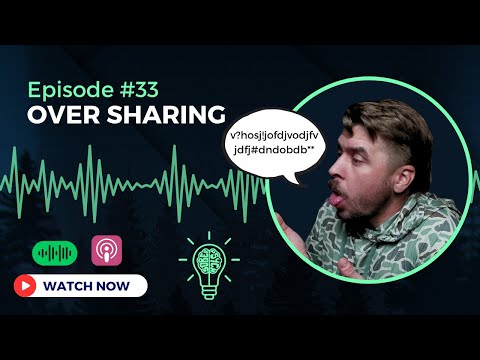
The Oversharing Epidemic: Why You Need to Shut Up Sometimes | Episode 33
In this unhinged episode, we’re tackling oversharing—that cringeworthy habit of dumping your life story on strangers or X for clout. With 70% psychological science and 30% hard-won sobriety wisdom, Michael rips into why we overshare, how it sabotages relationships, and its sneaky role in addiction recovery. Expect Jordan Peterson-level intensity, dark humor that hits like a shot of reality, and five practical tools to keep your emotional baggage off the public stage. Whether you’re in recovery or just tired of regretting your TMI moments, this episode is your wake-up call to shut up and save your dignity. 🔥 Why Watch? Unpack the psychology of oversharing (attachment issues, emotional chaos, and X likes, oh my!) Learn how oversharing fuels addiction and threatens sobriety Get 5 evidence-based tips to stop spilling your soul to the wrong crowd Laugh through the cringe with humor as real as your last bad decision

Protect Your Peace Cut Toxic People & Find Freedom
🧠 “Action Is a Language—Protect Your Peace Relentlessly” | Recovery & Mental Health Short Let me make this simple: if you're not showing up, you're showing me everything I need to know. Through this recovery journey, I’ve learned something powerful—action is a language. You can say you care all day long, but if your behavior says otherwise? Then I’ve got love for you… but you can kick rocks. I’ve fought tooth and nail for peace—mental, emotional, spiritual. And not just for me, but for the family I’ve been blessed to start. No more chaos. No more liars. No more emotional parasites. You bring drama? You’re gone. And that’s not bitterness. That’s clarity. It’s boundaries. It’s self-respect. See, when you’re isolated and struggling, your brain starts lying again: “Nobody loves me. I’m pathetic. I’m worthless.” That spiral? It’s deadly. But it only takes one person—one real, honest person who says, “You’re not perfect, but I still love you,” to disrupt that spiral. Even better? Someone who loves you enough to call out your BS while they’re at it. That’s the kind of connection worth fighting for. The rest? Cut it loose.

What They Don't Tell You About Quitting
🎯 “The World Was Painted Gray” – What They Don’t Tell You About Sobriety Most people think that when you quit drinking, life immediately gets better. But let me tell you—from lived experience—the real battle begins after the bottle. I remember sitting in my room, 100% sober, and the world felt like it was painted in gray. Not sadness. Not grief. Just… nothing. And that, my friends, is your brain trying to recalibrate. See, when you’ve used alcohol to artificially spike your dopamine for years, your baseline neurochemistry tanks when you quit. You’re not just facing “life without booze,” you’re facing life with deficient dopamine—the very thing that once made sunsets beautiful and jokes funny. This isn’t just anecdote. It’s neuroscience. Recalibration takes time. Months. Sometimes years. That’s why most recovering addicts feel flat, joyless, even disoriented long after detox ends. The problem isn’t just in the body—it’s in the mind. Addicts aren’t weak—they’re chemically rewiring themselves in real time. That’s brutal. But here’s the good news: freedom is on the other side. When the color starts to come back, it’s not artificial—it’s earned. 🧠 Psychological insight meets real talk. If you’re on this journey, don’t give up. The gray fades. The light returns.

Self-Criticism: The Inner Tyrant You Didn’t Hire | Sober Psychology Episode 26
Yo, Sober Psychology squad, it’s Michael, your mind-diving host! In this gut-punch of an episode, we’re tackling Self-Criticism—that inner jerk who calls you a failure for forgetting your lines or, worse, for stumbling in recovery. Expect razor-sharp psych wisdom (Jung, CBT, brain scans, oh my!) and real talk on how this trash-talking voice fuels addiction’s chaos. I’m serving up three legit tips to shut it down, plus laughs that don’t suck—think bad mechanics and a critic named Gary. Watch, chuckle, heal. Hit like, comment your critic’s dumbest line!

Grieving: The Chaos You Can’t Outrun | Sober Psychology Episode 25
Hey Sober Psychology crew, it’s Michael! In this powerful episode, we’re diving into the raw, messy world of Grieving—because loss isn’t just about saying goodbye; it’s about facing what addiction took from you and rebuilding in recovery. With a mix of brain science, Kübler-Ross’s stages, and a few laughs to keep it real, I unpack why you can’t outrun grief (spoiler: it’s faster than you). From denial to acceptance, we’ll explore how grieving shapes sobriety and sets you free. Join me for 40 minutes of insight and heart—audio on Spotify, video on YouTube. Share your story below!

Are You Trapped in Compliance? The Truth About Surrendering
In this episode, we’re tackling a psychological showdown for the ages: Compliance vs. Surrender. Ever wonder why you say "yes" when your soul’s screaming "no"? Or how letting go might just be the secret weapon in your recovery arsenal? As your resident psychology nerd (with a dash of humor to keep it real), I’m diving deep into the mind’s tightrope—breaking down Milgram’s shocks, Jung’s shadows, and what 12-step programs get right. We’ll explore how compliance keeps us stuck, especially in addiction, and why surrender isn’t giving up—it’s leveling up. Expect some laughs, a few "aha" moments, and practical insights you can take into your sober journey. Hit play, drop a comment, and let’s wrestle with this together!